
Introduction
At Gen1 Greenhouse in Nacogdoches, Texas, a quiet experiment is unfolding. This experiment is not rooted in mass production or instant results, but in patience, observation, and a deep respect for the natural adaptation of plants.
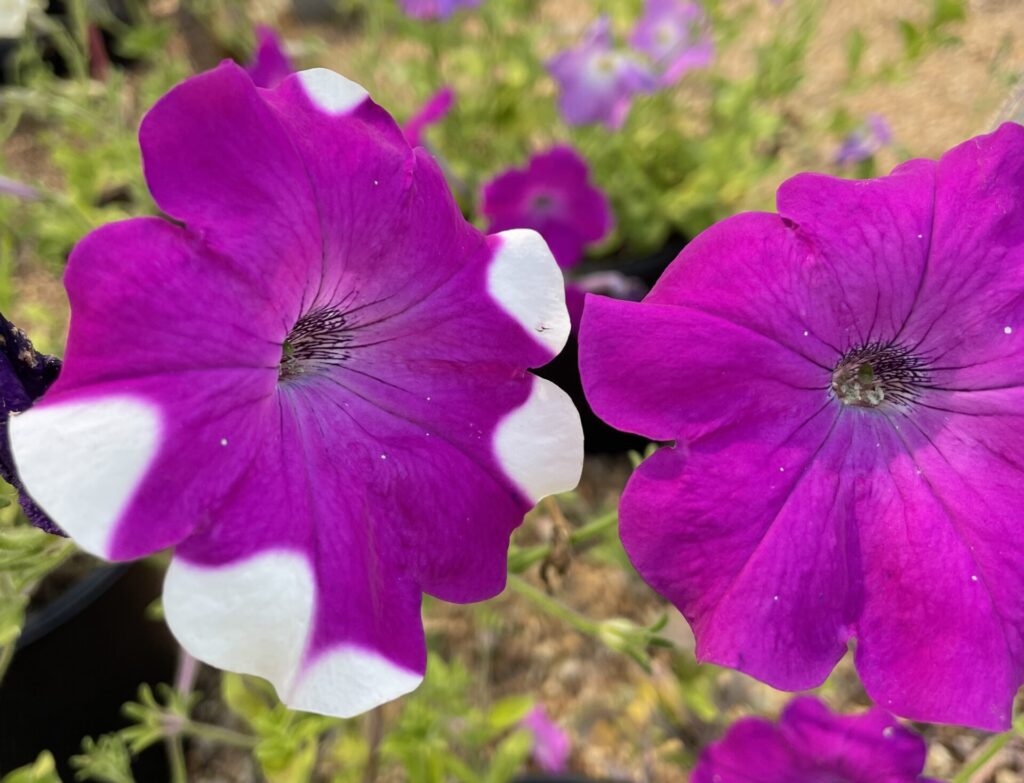
This project focuses on petunias (Petunia spp.), a plant most people recognize as nothing more than a common garden flower. What people do not realize is that beneath the familiar blooms of these plants lies a surprising amount of genetic diversity, history, and untapped potential.
Rather than trying to force our petunias to become a commercial variety that will look good on the shelf before dying once taken home, we are working with nature to stabilize a group of petunias that are growing wild here in Nacogdoches.
“What happens when we start with plants that have already adapted to a place—and carefully stabilize their best traits?” – Caleb Jones (Founder)
A Naturalized Beginning
The heart of this project is a group of petunias that have been growing naturalized in Nacogdoches for years. These plants are not recent store-bought varieties; rather, they likely originate as early members of the familiar hybrid species P. hybrida (a cross between the wild petunia species P. integrifolia and P. axillaris). This group reseeds itself, survives local weather extremes, and returns each season with absolutely no human care.
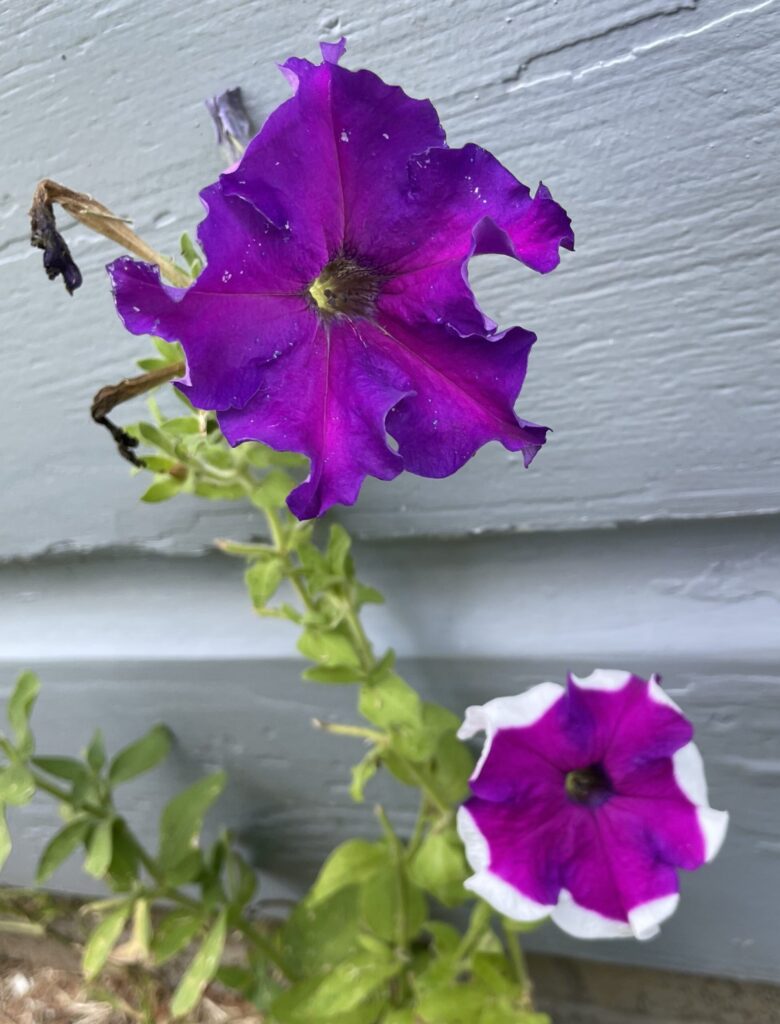
Over time, they have developed variation:
– White, pink, or purple flowers.
– Large or small blooms.
– Ruffled or smooth petals.
– Upright, mounding, or spreading growth.
– Large or small-leafed plants.
Rather than treating this variation as a problem, our project treats it as an opportunity. We plan to stabilize these varying traits to create predictable and uniform growth, while still preserving the hardiness and vigor that has allowed this group to survive for so long.
Our goal is not just to create one uniform cultivar though; in fact, we plan to create several varieties that specialize in each distinct trait found among this wild group.
Here is what Caleb—the founder of Gen1 Greenhouse, and head of the breeding program—has to say about the variation in this group:
“My favorite part of this naturalized group is its vast phenotypic diversity. The varying traits from small to large, or compact to spreading is truly fascinating! I cannot wait to see what else this group is capable of.” – Caleb Jones (Founder)
Breaking the Population Into Meaningful Groups
Early in the growing season of 2026, the naturalized plants are carefully observed and grouped by how they grow and flower. For example:
- Compact, upright plants
- Trailing or spreading plants
- Large-flowered types
- Small-flowered but floriferous types
- Color-dominant groups (white, pink, purple, multi-colored)
Only the best-performing plants in each group are kept for breeding. Plants that are weak, poorly structured, or inconsistent are removed.
From this point forward, plants are crossed only within their group, allowing distinct lines to begin forming naturally over time.
Looking Back to the Wild
To better understand (and occasionally strengthen) these local petunias, two wild ancestors are grown alongside them:
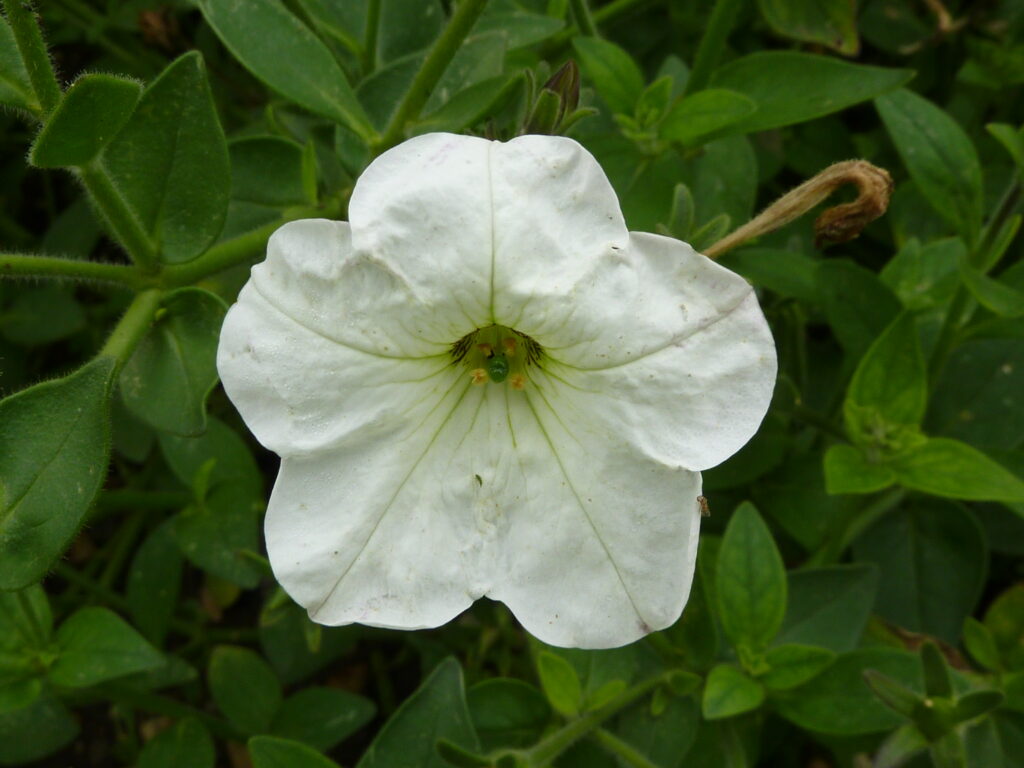

- Petunia axillaris (large white petunia)
Known for its fragrance, large trumpet-shaped flowers, and night-pollinated heritage. - Petunia integrifolia (violet petunia)
Known for its deep purple color, compact form, and durability.
Each wild species is first crossed with itself to confirm that it behaves consistently, helping determine whether it is truly species-like rather than a mislabeled hybrid.
These wild petunias are not used heavily. When they are introduced, it is done sparingly and usually followed by crossing back into the naturalized population so that garden performance is preserved while adding fresh genetic strength.
A Living Benchmark: The Laura Bush Petunia
Each year, Petunia × hybrida ‘Laura Bush’ (Laura Bush petunia) is grown alongside the experimental plants for reference and comparison.
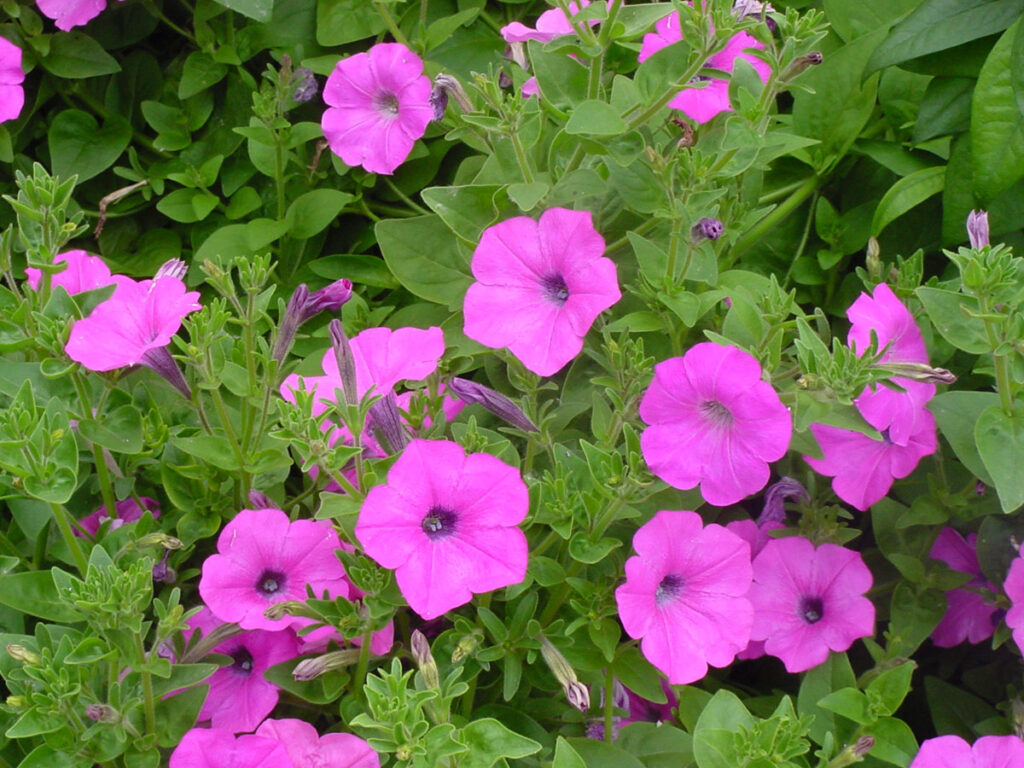
It is not planned for this variety to be involved in the crossing; instead, it serves as a living reference point, and a way to ask honest questions:
- Are the experimental plants as vigorous?
- Do they flower as reliably?
- Are they improving, or drifting away from what makes a good garden petunia?
The aim is not to create a copy of the Laura Bush, but having the compression serves to motivate and ensure that the project stays on course.
How the Breeding Actually Happens
Once plants reach maturity:
- Selected plants are hand-pollinated
- Each cross is labeled and documented
- Seeds are harvested and stored carefully
- The next generation is grown the following season
Early generations often look uniform, but later generations show dramatic variation. This is expected and essential.
Each year, selection becomes more focused:
- Poor performers are removed
- Strong, consistent plants are kept
- Distinct lines slowly take shape
How Long Does This Take?
Even with careful planning and maximum efficiency, plant breeding takes time.
Under ideal conditions:
- Years 1: Sorting and defining plant groups
- Years 2: Major variation appears; best plants identified
- Years 3: Lines begin showing consistency
- Years 4: Several stable, reliable petunia lines emerge
This project is measured in years, not seasons. The project may even take up to eight years if all does not go according to plan.
What This Project Is (and Is Not)
This project is:
- An exploration of local adaptation
- A guided, long-term breeding effort
- A way to preserve and improve resilient plants
This project is not:
- A race to release a commercial hybrid
- A single-cultivar breeding program
- A shortcut-driven experiment
Instead, it follows a slower model; one where plants are allowed to show what they can become, and humans simply help steer the process.
Looking Ahead
The ultimate goal is to develop several distinct petunia lines that:
- Thrive in East Texas conditions
- Are genetically resilient
- Flower beautifully and reliably
- Carry a story of place and patience


Whether these lines eventually become named cultivars or remain living experiments, they represent something increasingly rare in modern gardening: plants shaped by time, observation, and respect for natural variation.
Photos, updates, and seasonal observations will continue to be shared as the project progresses, because in a project like this, the journey is just as important as the destination.