
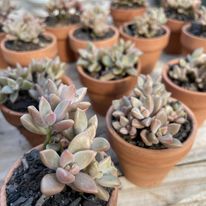
Propagating succulents is one of the easiest and most rewarding ways to expand your collection. Many succulents can produce new plants from leaves, stems, offsets, or seeds, allowing a single healthy plant to become several new plants.
However, not every succulent can be propagated in the same way. Some species root readily from leaves, while others are much more reliably propagated from stem cuttings or offsets. Understanding the growth habit of the particular succulent you are propagating is one of the most important factors in achieving good results.
This guide explains the most common methods of succulent propagation and how to use each method successfully.
Succulent Propagation at a Glance
Leaf Propagation: Best for many leafy succulents that can produce new roots and shoots from individual leaves.
Stem Cuttings: Excellent for branching or stem-forming succulents and for rejuvenating stretched plants.
Offsets: One of the easiest methods when the parent plant naturally produces small plants.
Seeds: The best method for producing genetically unique plants and developing new cultivars or hybrids.
Light: Bright, indirect light is generally best while newly propagated plants are developing roots and shoots.
Water: Avoid keeping propagation media constantly wet. Excess moisture can cause unrooted cuttings and leaves to rot.
Soil: Use a clean, porous, well-draining propagation medium.
What Is Succulent Propagation?
Succulent propagation is the process of producing new plants from an existing succulent.
There are two broad categories of propagation: sexual propagation and asexual propagation.
Sexual propagation occurs when a plant produces seeds through reproduction involving pollen and an ovule. Seed-grown plants are genetically different from their parents, which makes this method especially important for plant breeding and developing new varieties.
Asexual propagation, also called vegetative propagation, produces new plants from portions of an existing plant. Depending on the method, the resulting plant is genetically identical to the parent plant and is therefore considered a clone.
The most common forms of succulent propagation are leaf propagation, stem cuttings, offsets, and seeds.
Before You Begin
Always start with healthy plant material.
Avoid propagating from plants that are severely diseased, rotting, badly damaged, or heavily stressed. Healthy cuttings and leaves have a much better chance of producing vigorous new plants.
Use a clean, sharp knife, pruning shears, or scissors when making cuts. Sanitizing cutting tools between plants helps reduce the possibility of spreading pathogens. The University of Arizona Cooperative Extension recommends using a sharp, sanitized blade when taking cuttings.
Choose a clean container and a well-draining propagation medium. Succulents generally require good drainage and abundant light, while excessive moisture can contribute to rot.
Propagating Succulents from Leaves
Leaf propagation is one of the most fascinating methods of succulent propagation.
Many succulents in the Crassulaceae family can produce roots and new shoots from detached leaves. Echeveria, Graptopetalum, Graptoveria, Sedum, and related plants are commonly propagated this way, although success varies considerably between species and cultivars.
Step 1: Select a Healthy Leaf
Choose a mature, healthy leaf from the lower or middle portion of the plant.
Avoid leaves that are already damaged, diseased, or excessively dehydrated.
Step 2: Remove the Leaf Carefully
Gently twist the leaf from side to side until it separates from the stem.
The most important part is the base of the leaf. If the base breaks off or remains attached to the stem, the leaf may fail to produce a new plant.
A cleanly detached leaf with an intact base has the best chance of successful propagation.
Step 3: Allow the Leaf to Dry
Place the detached leaf in a dry location out of intense direct sunlight.
Allow the damaged area to dry and callus before introducing significant moisture. This helps reduce the risk of rot.
Step 4: Place the Leaf on Propagation Medium
Once the cut end has dried, place the leaf on top of a clean, well-draining propagation medium.
Do not bury the entire leaf.
The leaf should generally rest on the surface so that the developing roots can grow into the medium.
Step 5: Provide Bright Light
Place the leaves in a bright location protected from intense direct sunlight.
Newly propagating leaves do not have an established root system and can dry out or become damaged under extreme conditions.
Step 6: Wait for Roots and New Growth
Depending on the species and environmental conditions, roots may begin to develop before a new rosette becomes visible.
Eventually, a small plant may form at the base of the leaf.
Do not immediately remove the original leaf. The developing plant can continue to use the stored nutrients and water within the original leaf while it establishes itself.
Once the new plant has developed a sufficient root system and the original leaf has been consumed or dried up, it can be treated as an established young succulent.
Propagating Succulents from Stem Cuttings
Stem cuttings are particularly useful for succulents that naturally produce stems or branches.
They are also an excellent way to rejuvenate succulents that have become stretched from insufficient light.
Step 1: Select a Healthy Stem
Choose a healthy section of stem with active growth.
Avoid sections showing signs of rot or disease.
Step 2: Make a Clean Cut
Using a sharp, sanitized tool, make a clean cut through the stem.
The exact location and size of the cutting will depend on the species. Some succulents can be propagated from very small cuttings, while others require longer sections of stem.
Step 3: Allow the Cutting to Callus
Place the cutting in a dry location with good air circulation and allow the cut surface to dry.
The amount of time required varies according to the plant, cutting size, temperature, and humidity.
The objective is not to dry out the entire cutting. The goal is simply to allow the damaged cut surface to heal and form a callus before planting.
This step is particularly important for many succulent stem cuttings because placing a fresh, wet cut directly into moist soil can increase the likelihood of rot. Extension guidance for cacti and succulents similarly recommends allowing cuttings to air-dry before planting.
Step 4: Plant the Cutting
Once the cut surface has dried, place the cutting into a well-draining propagation medium.
The cutting should be deep enough to remain upright, but do not bury unnecessary portions of the stem.
Step 5: Provide Suitable Conditions
Keep the cutting warm and provide bright light without immediately exposing it to extreme direct sunlight.
Avoid saturating the soil. A cutting without roots cannot use water as efficiently as an established plant.
As roots develop, the cutting can gradually be transitioned to normal succulent care.
Propagating Succulents from Offsets
Offsets are small plants that naturally develop from the parent plant.
This is one of the simplest forms of succulent propagation because the new plant has already begun developing before it is separated from the parent.
Many succulents produce offsets, including numerous Aloe, Agave, Sempervivum, Haworthia, and other genera.
Step 1: Choose a Suitable Offset
Select a healthy offset that is large enough to survive independently.
If possible, choose an offset that has already developed roots of its own.
Step 2: Separate the Offset
Carefully remove the offset from the parent plant.
Depending on the species, the offset may separate easily or may require a clean knife to cut the connection.
Avoid unnecessary damage to both the parent plant and the offset.
Step 3: Allow Damaged Areas to Heal
If the offset has a fresh wound, allow the damaged area to dry before planting, particularly when the plant is highly susceptible to rot.
Step 4: Plant the Offset
Place the offset in a well-draining growing medium.
If it already has roots, plant it at approximately the same depth at which it was previously growing.
If it does not have roots, avoid burying the entire plant. The exact method depends on the species and its growth habit.
Step 5: Establish Normal Care
Once the offset has established roots, gradually transition it to the normal light and watering conditions required by that species.
Propagating Succulents from Seeds
Growing succulents from seed is slower than vegetative propagation, but it has an important advantage: seedlings are genetically unique.
This makes seed propagation particularly valuable to plant breeders and collectors interested in producing new forms.
When a succulent is propagated vegetatively from a leaf, cutting, or offset, the resulting plant is generally a clone of the parent. When grown from seed, however, the offspring receives genetic material through sexual reproduction and can therefore differ from its parents.
Collecting Succulent Seeds
Allow the plant to flower and produce seed capsules or other mature fruiting structures.
Collect the seeds once they are mature and dry.
Seed maturity varies considerably between genera, so research the particular species whenever possible.
Sowing Succulent Seeds
Use a clean container and a fine, well-draining growing medium.
Succulent seeds are often very small, so they generally should not be buried deeply. Follow the requirements of the particular species.
Maintain adequate moisture for germination without allowing the medium to become stagnant or waterlogged.
Once germination occurs, provide appropriate light and gradually transition seedlings toward the conditions required by mature plants.
Propagating Succulents in Water
Water propagation is popular with many houseplants, but it is not the best universal method for succulents.
Some succulent cuttings can produce roots in water, but many succulent species are better suited to rooting in a porous, well-draining medium.
Succulents are adapted to storing water within their leaves and stems, and excessive moisture around an unrooted cutting can encourage rot.
For most succulent propagation, a well-draining medium is the safer general recommendation.
How Long Does Succulent Propagation Take?
There is no single propagation timeline that applies to every succulent.
Some plants can begin producing roots within a relatively short period, while others may take weeks or considerably longer.
Temperature, humidity, light, plant species, cutting size, and propagation method all influence the speed of rooting.
Warm conditions are generally favorable for root development in many succulents, but excessive heat combined with high humidity can increase the risk of rot.
Do not assume that a cutting has failed simply because roots are not visible immediately. Some succulents spend considerable time establishing roots before producing obvious new growth.
Common Succulent Propagation Problems
The Leaf Rotting
Rot is commonly associated with excessive moisture.
Make sure the propagation medium drains well and avoid keeping the leaf constantly wet.
The Leaf Does Nothing
Not every succulent leaf is capable of producing a new plant.
The leaf may also have been damaged during removal, particularly if the base was torn away from the leaf.
Give viable leaves adequate time and suitable environmental conditions before discarding them.
The Cutting Keeps Rotting
The cutting may have been planted while the cut surface was still fresh, or the propagation medium may be retaining too much moisture.
Allow the damaged area to callus and improve drainage.
If rot has progressed into healthy tissue, remove the affected portion with a clean tool and allow the new cut to heal before attempting to root the remaining healthy section.
The New Plant Is Stretching
Insufficient light is often responsible for weak, elongated growth.
Move the developing plant toward a brighter location, but acclimate it gradually if it has been growing in low light.
The Propagation Dries Out
Newly propagated plants have limited or no root systems and can be more vulnerable to dehydration than established plants.
However, the solution is not necessarily to keep the soil constantly wet. Instead, provide appropriate humidity and moisture for the particular species while maintaining good drainage and airflow.
The Best Time to Propagate Succulents
The ideal propagation season varies by species, but active growth is generally preferable to periods of dormancy.
For many warm-growing succulents, spring and summer provide favorable conditions for rooting because temperatures and light levels support active growth.
In East Texas, warm conditions can make much of the growing season suitable for succulent propagation. However, extremely hot, humid periods can create additional challenges, particularly for unrooted cuttings.
Propagation is usually more difficult during cold winter weather because many succulents slow their growth substantially.
Succulent Propagation for Plant Breeding
Propagation becomes especially interesting when the goal is not simply to make more plants, but to develop something new.
Vegetative propagation is used to preserve a particular plant. If you discover a succulent with an unusual color, growth habit, flower, or other desirable characteristic, propagating it from a leaf, stem, or offset can allow you to preserve that individual genotype.
Seed propagation is different.
When two compatible plants are crossed and the resulting seeds are grown, the offspring can display combinations of characteristics from both parents. Some seedlings may exhibit traits that neither parent visibly displays.
This is the foundation of much ornamental plant breeding.
For anyone interested in developing new succulent cultivars, keeping accurate records of parentage, pollination dates, seed batches, and individual seedling characteristics is extremely valuable.
Tips for Successful Succulent Propagation
Start with healthy plants.
Use clean, sharp cutting tools.
Choose the propagation method appropriate for the species.
Allow fresh succulent cuttings to callus when appropriate.
Use a porous, well-draining propagation medium.
Provide bright light without exposing vulnerable new growth to sudden intense sunlight.
Avoid excessive watering.
Be patient. Root development may occur before visible new growth.
Label your propagations, especially when growing multiple species or cultivars.
When growing from seed, record the parents whenever known.
Conclusion
Succulent propagation is a simple way to produce new plants, preserve unusual specimens, and expand a collection. Depending on the species, you may be able to propagate a succulent from a leaf, stem cutting, offset, or seed.
The most important principle is to remember that succulents are not all propagated in exactly the same way. Learn the growth habits of the plant you are working with, provide excellent drainage, avoid excessive moisture, and give new propagations the appropriate light and temperature.
With practice, succulent propagation can become more than simply a way to produce additional plants. It can also become an opportunity to experiment with different species, preserve exceptional plants, and even develop new cultivars.
At Gen1 Greenhouse, succulent propagation is an important part of what we do. We enjoy growing, propagating, and experimenting with succulents and sharing these plants with other gardeners.




Pingback: Graptopetalum – a Succulent Genus - Gen1 Greenhouse