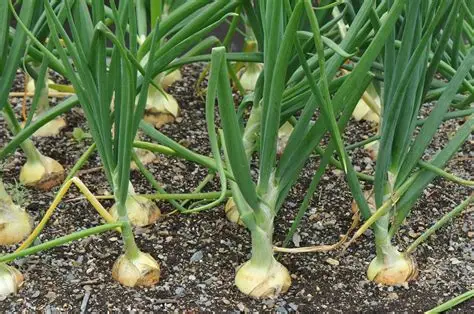
Yellow onions are dependable cool-season vegetables that can produce excellent bulbs in East Texas when planted at the proper time. Growing onions from seed takes longer than growing from sets or transplants, but starting from seed gives gardeners access to a much wider selection of varieties.
The most important consideration when choosing an onion variety is day length. Onion bulbs form in response to increasing day length, so varieties must be adapted to the region where they are grown.
For Texas gardens, short-day and intermediate-day yellow onions are generally the most appropriate choices. Texas A&M specifically lists numerous short-day yellow onions for Texas, including Texas 1015Y, Early Grano, Granex, and others.
Simplified Care Guide
Planting time: Fall through winter in East Texas
Seed depth: ¼–½ inch
Spacing: 2–3 inches for medium bulbs; 3–4 inches for larger bulbs
Light: Full sun
Soil: Fertile, loose, well-drained soil
Water: Approximately 1 inch per week, adjusted for rainfall
Fertilizer: Feed during active vegetative growth
Harvest: When tops begin falling over and necks become soft
When to Sow Yellow Onion Seeds
Unlike warm-season vegetables, onions can be started during the cooler months.
Texas A&M recommends sowing onion seed from October through December for bulb production, with seedlings eventually thinned to approximately 2–3 inches apart.
The exact timing can vary depending on the variety. Always check the seed packet to make sure the variety is appropriate for your day length and growing region.
Starting onions in fall allows the plants to establish foliage during the cool season before bulb formation accelerates as day length increases.
Sowing Onion Seeds
Prepare a loose, well-drained seedbed.
Sow the seeds approximately ¼–½ inch deep. For a dense row of seedlings, sow approximately 2 seeds per inch and thin later.
If your goal is large bulbs, allow more space between plants. Plants spaced approximately 3–4 inches apart generally have more room to develop larger bulbs than tightly spaced onions.
Onions can also be started indoors and transplanted into the garden. Seedlings should not be planted deeply; burying the developing bulb too deeply can interfere with proper bulb formation.
Light Requirements
Yellow onions require full sun.
Choose a location that receives at least 6 hours of direct sunlight each day, preferably more.
Good sunlight is especially important as the plants approach the bulbing stage.
Soil and Planting
Onions grow best in fertile, loose, well-drained soil with a pH around 6.0–7.0. Sandy loam is particularly well suited to onion production.
Heavy or compacted soil can restrict bulb development. If your garden soil is heavy clay, consider growing onions in raised beds or raised rows.
Work compost or other organic matter into the soil before planting, but avoid creating an excessively rich or water-retentive planting bed.
Watering
Onions have relatively shallow roots and need consistent moisture.
Provide approximately 1 inch of water per week from rainfall and irrigation, increasing irrigation during hot or dry weather. Consistent moisture is particularly important while bulbs are enlarging.
Avoid allowing the soil to alternate between extremely dry and saturated conditions.
As harvest approaches and the tops begin to fall over, gradually reduce irrigation and allow the soil to become somewhat drier.
Fertilizing
Onions benefit from fertile soil and regular nutrition during the growing season.
A balanced fertilizer can be incorporated into the soil before planting. Additional fertilizer can be applied while plants are actively producing leaves.
Texas A&M recommends fertilizing onions both before planting and again once plants have developed several leaves.
Do not continue heavy nitrogen fertilization late into the season. Once the plants are actively bulbing, excessive nitrogen can encourage continued leaf growth rather than proper maturation.
Weed Control
Keep onion beds free of weeds.
Onions are shallow-rooted and do not compete well with aggressive weeds. Weed carefully and avoid deep cultivation that can damage the roots.
Mulching lightly around established plants can help suppress weeds and conserve moisture, but avoid burying the developing bulbs.
Harvesting Yellow Onions
Allow bulb onions to mature naturally.
As the bulbs approach maturity, the necks begin to soften and the green tops begin falling over. Texas A&M recommends harvesting when the tops begin to fall.
Pull the onions from the soil and allow them to dry in a well-ventilated location. If weather conditions are dry, they can initially be cured outdoors, but protect them from prolonged rain.
Curing Onions for Storage
Proper curing is important if you want onions to store well.
Allow the harvested onions to dry until the outer skins become dry and papery and the necks are completely dry.
After curing, trim the tops and roots and store the onions in a cool, dry, well-ventilated location.
Growing Green Onions Instead
Onions grown from seed do not have to be grown all the way to mature bulbs.
Young plants can be harvested as green onions while the bulbs are still small. This is particularly useful when you have planted onions closer together and later thin the row.
The thinnings can be eaten rather than discarded.
Seasonal Care in East Texas
Fall-planted onions will grow slowly during the cooler months and then accelerate as temperatures and day length increase.
East Texas gardeners should pay particular attention to variety selection. A yellow onion that performs well in a northern state may not bulb correctly in Texas if its day-length requirement is inappropriate.
For the best results, choose a short-day or appropriately adapted intermediate-day yellow onion recommended for Texas.
Where to Find Quality Seeds
Gen1 Greenhouse offers vegetable seeds and gardening supplies for East Texas gardeners. Visit our online store or nursery in Nacogdoches for current seasonal selections.
Summary
Yellow onions can be very productive in East Texas when they are planted during the cool season and given the correct day-length conditions.
Start with a variety suited to Texas, sow it at the proper time, keep the plants well watered and weeded, and allow the bulbs to mature and cure fully before storing them.