Simplified Lantana Care Guide
Lantana is one of the easiest flowering plants to grow in East Texas. Give it plenty of sunlight, well-drained soil, and enough water to establish a strong root system, and it can provide colorful blooms from spring through fall.
Light: Full sun is best. Aim for 6-8 hours of direct sunlight each day.
Water: Water newly planted lantana regularly until established. During the spring and fall, a deep watering twice per week is sufficient, but during the summer, young lantana may require a deep watering up to four times per week. After about a year, once established, lantana is drought tolerant, but it will flower more heavily when it receives deep watering weekly during extended periods of summer heat.
Soil: Use well-drained soil. Lantana tolerates many soil types, but poorly drained or constantly wet soil, like clay, can lead to root problems. If your soil is clay-like, then amend with finished compost or other organic material.
Fertilizer: Lantana generally needs very little fertilizer. One light application in spring will provide better blooms, but no fertilizer is necessary. Too much fertilizer can encourage excessive foliage growth at the expense of flowers.
Pruning: Once established, lightly trim 1″-2″ of non-flowering stems on the lantana throughout the growing season to maintain its shape and encourage new flowering growth. Perennial lantanas can be cut back heavily in late winter or early spring before new growth begins.
Winter: In East Texas, many lantanas can survive winter, but their stems may be damaged by freezing temperatures. Do not be concerned if the plant appears dead after a hard freeze. Wait until late winter or early spring before cutting back frost-damaged growth. Mulching helps protect the roots from freezes.
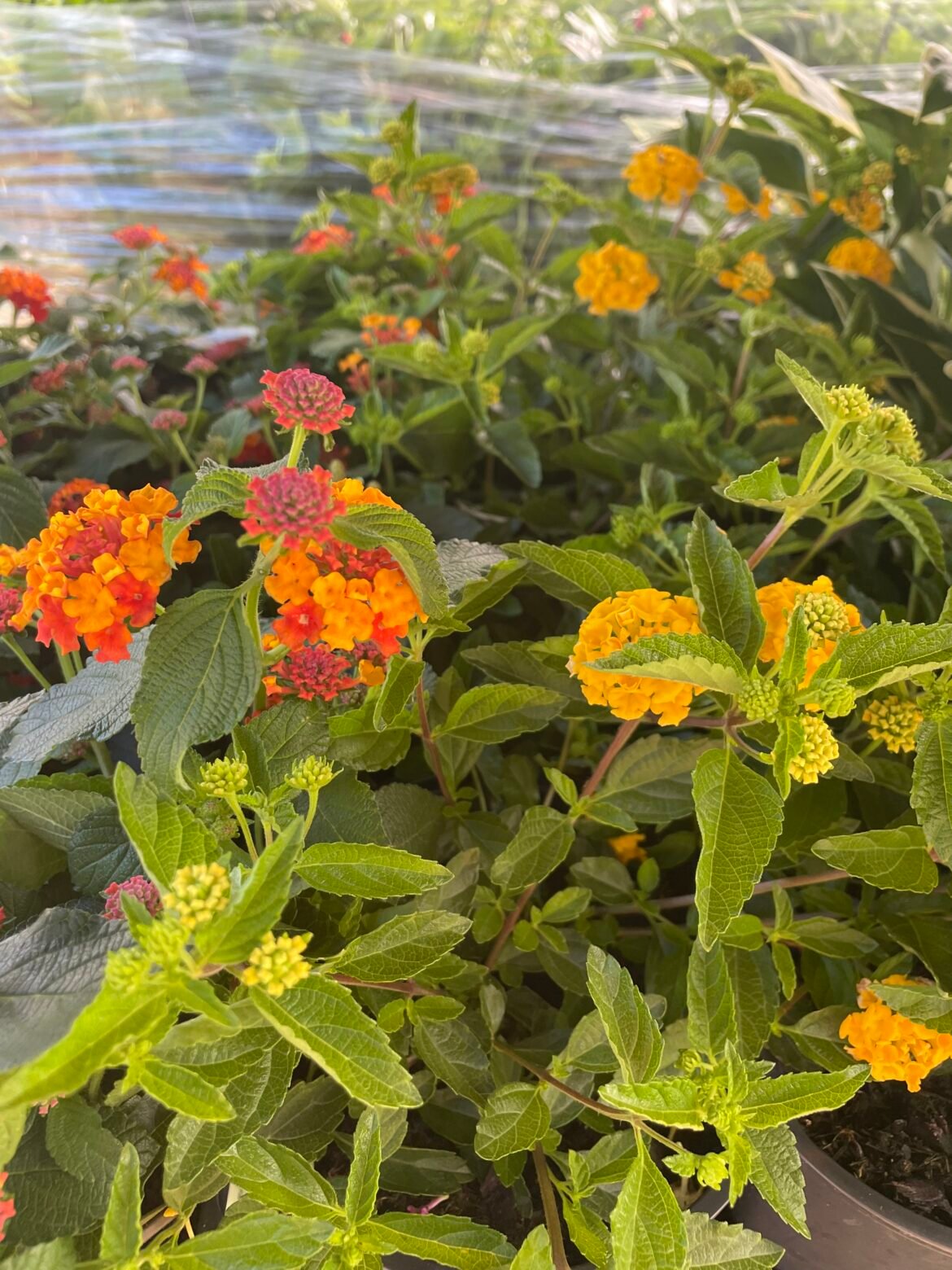
Pollinators: Lantana flowers are highly attractive to butterflies and other pollinators.
Important: Lantana berries are poisonous if eaten. Keep children from consuming the berries.
For the simplest approach, remember this: sun, drainage, moderate water, very little fertilizer, and pruning when necessary.
Advanced Lantana Care Guide
Introduction
Lantana is a group of highly adaptable flowering plants in the verbena family, Verbenaceae. Their colorful flower clusters, long flowering season, heat tolerance, and ability to withstand periods of drought make them particularly useful in East Texas landscapes.
Common ornamental lantanas include Lantana camara and Lantana montevidensis, along with numerous hybrids and cultivated selections. Depending on the variety, lantanas may grow as upright shrubs, compact mounds, spreading groundcovers, or trailing plants.
East Texas provides generally favorable conditions for lantana. Hot summers, abundant sunlight, and relatively long growing seasons allow lantana to flower heavily from spring through fall. However, the combination of heavy rainfall, humid weather, and occasional winter freezes means that proper drainage and winter management are particularly important.
Lantana is generally hardy in USDA Zones 8–11, although actual winter survival varies considerably by species and cultivar. In East Texas, some lantanas will return reliably from their roots after winter while others may be better treated as annuals.
1. Recommended Lantana Types for East Texas
There are several different types of lantana that can be grown successfully in East Texas. Their growth habit and winter hardiness should be considered when selecting a plant.
| Common Name | Scientific Name | Characteristics | Ideal Setting |
|---|---|---|---|
| Common Lantana | Lantana camara | Upright or rounded growth; many flower colors; heat and drought tolerant | Flowerbeds, borders, containers |
| Texas Lantana | Lantana urticoides | Texas native; yellow, orange, and red flowers; extremely drought tolerant | Xeriscapes, borders, native gardens |
| Texas/Orange Lantana | Lantana horrida | Shrubby growth; yellow-orange flowers; adapted to hot, dry conditions | Sunny beds and naturalized landscapes |
| Trailing Lantana | Lantana montevidensis | Low, spreading or trailing habit; commonly lavender or purple flowering | Groundcovers, containers, hanging baskets |
| Hybrid Lantanas | Lantana hybrids | Wide range of colors, sizes, and growth habits | Beds, containers, borders, mass plantings |
Texas lantana is particularly well adapted to hot, dry conditions and is hardy throughout USDA Zones 8–11. Texas A&M AgriLife describes it as requiring full sun and excellent drainage, while noting that it can tolerate drought extremely well.
Many of the lantanas sold in nurseries are hybrids or cultivated selections rather than pure species. This is important because two plants both labeled simply “lantana” may have substantially different mature sizes, growth habits, and winter hardiness.
2. Environmental Requirements
a. Light
Lantana performs best in full sun, meaning at least 6 hours of direct sunlight per day.
For the heaviest flowering, 8 or more hours of direct sunlight is often preferable when the plant has adequate water. Lantana can tolerate some partial shade, but reduced sunlight generally results in fewer flowers and weaker, more open growth.
In East Texas, lantana should generally be planted in the sunniest portion of the landscape.
Optimal: Full sun.
Minimum: Approximately 6 hours of direct sunlight daily.
Avoid: Deep shade or locations where buildings or trees block most afternoon sunlight.
A common mistake is treating lantana as a plant that can tolerate substantial shade simply because it survives there. It may survive, but it will usually not flower nearly as well as a plant grown in full sun.
b. Temperature and Humidity
Lantana is exceptionally tolerant of heat and performs well during East Texas summers.
The major climatic limitation in East Texas is not summer heat, but rather winter cold. Some lantanas can survive freezing temperatures and regrow from their roots, while tender cultivars may be killed completely by severe freezes.
Perennial lantanas often remain dormant during winter and may not begin producing new growth until temperatures and soil conditions become consistently warm.
Summer: Lantana generally tolerates extreme heat very well.
Winter: Protect young or tender plants from severe freezes when practical.
Important: Do not assume that brown foliage immediately after a freeze means the entire plant is dead. The root system may remain alive even when the above-ground stems have been killed.
c. Soil
The most important soil characteristic for lantana is good drainage.
Lantana is adaptable to many different soil textures, including sandy, loamy, and clay soils, provided excess water can drain away.
East Texas soils can vary considerably, from sandy soils to heavier clay soils. In areas with heavy clay or poor drainage, consider planting lantana in raised beds or improving the soil structure before planting.
Preferred characteristics:
- Well-drained soil
- Moderate organic matter
- Slightly acidic to neutral soil
- Good aeration around the roots
Lantana does not require extremely rich soil. In fact, excessively fertile soil can encourage vegetative growth while reducing flowering.
d. Watering
Newly planted lantana requires regular watering while its root system becomes established.
During the first several weeks after planting, water deeply enough to moisten the developing root zone. The exact frequency will depend on temperature, soil type, rainfall, and plant size.
Once established, lantana is highly drought tolerant. However, drought tolerance does not mean that the plant should never be watered. During prolonged periods of East Texas summer heat and drought, a thorough watering approximately once a week can maintain better flowering and growth.
A good general approach is:
Newly planted: Keep the root zone consistently moist, but never saturated.
Established: Allow the soil to dry somewhat between waterings, then water deeply.
During extreme summer drought: Provide a deep watering approximately once per week if sufficient rainfall has not occurred.
Avoid constantly wet soil. Excess moisture, particularly when combined with poor drainage, can cause root problems.
Whenever possible, water at the base of the plant rather than repeatedly wetting the foliage. This improves water-use efficiency and helps reduce disease.
3. Fertilization
One of the most common mistakes when growing lantana is applying too much fertilizer.
Lantana naturally performs well in relatively lean soil and generally does not require heavy feeding. One light spring application is generally sufficient for established landscape plants.
For established landscape plants:
- Apply a light, balanced fertilizer in spring if needed.
- A second light application during summer may be used for particularly vigorous plants if they are actively growing.
- Do not heavily fertilize drought-stressed plants.
- Avoid excessive nitrogen.
Too much nitrogen can produce large amounts of green foliage while reducing flowering and potentially making plants more susceptible to disease.
Container-grown lantana may require more frequent fertilization because nutrients are lost through repeated watering. A diluted, balanced water-soluble fertilizer can be used according to the product label.
4. Mulching and Ground Management
A layer of organic mulch can be beneficial around lantana, particularly during the hot East Texas summer.
Apply approximately 2–3 inches of mulch around the plant while keeping the mulch slightly away from the main stems.
Good mulch materials include:
- Pine bark
- Shredded hardwood
- Pine straw
- Compost
- Other quality organic mulches
Mulch helps conserve soil moisture, moderate soil temperature, and reduce competition from weeds.
However, lantana should not be planted into a constantly wet environment simply because mulch has been added. Good drainage remains more important than moisture retention.
5. Pruning
Pruning is useful for maintaining lantana’s shape, controlling size, and encouraging fresh flowering growth.
Growing-Season Pruning
Lightly trim long or overgrown shoots throughout the growing season.
Removing excessive tip growth encourages the plant to branch and can produce a fuller appearance with more flowering stems.
If a plant becomes significantly larger than desired, it can generally be reduced by approximately one-third without harming the plant.
Spring Pruning
Perennial lantanas that have survived the winter can be cut back substantially in late winter or early spring before vigorous new growth begins.
A common approach is to cut the previous year’s growth back to approximately 6–12 inches above ground level.
Texas lantana can be pruned back to approximately 8 inches in early spring to encourage fresh growth.
Avoid Excessive Fall Pruning
Avoid cutting perennial lantanas severely in the fall.
Leaving some existing growth can provide additional protection for the crown and roots during winter. Hard pruning is better performed in late winter or early spring after the worst freezing weather has passed.
6. Propagation
Lantana can be propagated by seed, stem cuttings, and, in some cases, division.
a. Stem Cuttings
Stem cuttings are one of the easiest ways to reproduce desirable lantana plants.
Take several-inch-long cuttings from healthy, actively growing stems. Remove the lower leaves and place the cuttings into a moist, well-drained propagation medium.
Rooting hormone can be used to improve rooting consistency, although lantana can root without it under suitable conditions.
Several-inch-long cuttings taken in late summer can root successfully when treated with rooting hormone and placed into moist, well-drained soil.
b. Seed
Lantana can also be grown from seed.
However, plants grown from seed may not remain true to the characteristics of the parent plant, particularly when the parent is a hybrid or named cultivar.
This makes vegetative propagation preferable when the goal is to preserve a particular flower color, growth habit, or other cultivar characteristic.
c. Division
Some established lantanas can be divided by carefully separating portions of the root system and replanting them.
Division is generally more useful for large, established perennial plants than for small nursery-grown specimens.
7. Pests and Diseases
Lantana is generally a durable landscape plant, but it can still experience pest and disease problems.
Spider Mites
Spider mites may become problematic during hot, dry weather.
Symptoms can include:
- Fine stippling on leaves
- Yellowing or bronzing foliage
- Fine webbing during severe infestations
- Reduced plant vigor
Maintaining adequate plant hydration and monitoring the undersides of leaves can help detect infestations early.
Lantana Lace Bug
Lantana lace bug can cause stippling, discoloration, and eventual leaf drop. Heavy infestations can significantly reduce the appearance and flowering performance of a plant.
Inspect the undersides of leaves when damage is observed.
Powdery Mildew
Powdery mildew can occasionally occur, particularly where air circulation is poor.
Planting lantana in full sun, providing adequate spacing, and avoiding unnecessary overhead irrigation can help reduce disease pressure.
Root Problems
Poor drainage is one of the most serious environmental problems for lantana.
A plant that is repeatedly kept in saturated soil may decline even though lantana is otherwise extremely drought tolerant.
When lantana is struggling, do not automatically assume that it needs more water. Check the soil first.
8. Seasonal Care Notes
| Season | Key Tasks |
|---|---|
| Spring | Prune back winter-damaged growth; resume active watering; fertilize lightly if necessary; plant new lantanas after the danger of hard frost has passed. |
| Summer | Provide full sun; water deeply during prolonged drought; lightly prune for shape and additional flowering; monitor for spider mites and lace bugs. |
| Fall | Reduce unnecessary watering as temperatures decline; allow plants to begin preparing for dormancy; avoid severe pruning of perennial plants. |
| Winter | Protect tender plants from severe freezes; leave frost-damaged growth in place until late winter; avoid keeping dormant plants excessively wet. |
In East Texas, spring is often the most important season for deciding whether a lantana has successfully survived winter. A plant may appear completely dead following a freeze and still produce new shoots from the base once temperatures warm.
Do not remove a potentially living perennial lantana too early in spring.
9. Lantana in the East Texas Landscape
Lantana is particularly useful in landscapes where heat tolerance, long-lasting color, and low water requirements are important.
It can be used as:
- Flowerbed specimens
- Border plants
- Mass plantings
- Groundcovers
- Container plants
- Hanging baskets
- Pollinator gardens
- Xeriscapes
- Cottage gardens
- Butterfly gardens
Trailing lantanas are especially useful for spilling over retaining walls, containers, and raised beds, while upright varieties can provide substantial color in flowerbeds and landscape borders.
Lantana flowers are highly attractive to butterflies and other pollinators, making the plant valuable in gardens designed to support beneficial insects.
10. Important Note About Lantana Berries
Lantana produces small berries after flowering. These berries change color as they mature and may become dark or black when ripe.
The berries of lantana are considered poisonous if eaten.
For this reason, lantana should be planted with appropriate caution around young children, pets, or livestock that may attempt to eat the fruit.
Removing spent flower heads before they produce mature berries can also help reduce unwanted seed production.
11. Why Lantana Is So Well Suited to East Texas
Lantana combines several characteristics that make it particularly valuable for East Texas gardening.
It tolerates intense summer heat, performs well in full sun, requires relatively little fertilizer, tolerates periods of drought once established, and can flower for much of the growing season.
Texas lantana is especially well adapted to hot, dry conditions and can bloom from approximately April through October under suitable conditions.
The primary challenge is winter. While many lantanas can survive in Zone 8 conditions, their performance depends heavily on the particular species or cultivar and the severity of the winter.
For the best long-term results, choose a cultivar appropriate for your intended use and do not assume that every lantana sold as a bedding plant will survive every East Texas winter.
Conclusion
Lantana is an excellent choice for East Texas gardeners who want a colorful, heat-tolerant, relatively low-maintenance flowering plant.
The formula for success is simple: plant lantana in full sun, provide excellent drainage, water regularly while it establishes, avoid excessive fertilizer, and prune it appropriately.
Once established, lantana can tolerate the heat and occasional drought of an East Texas summer while continuing to produce flowers that attract butterflies and other pollinators.
For perennial lantanas, patience after winter is particularly important. Even when the stems have been killed by freezing temperatures, the roots may remain alive and produce new growth once spring temperatures rise.
With the right variety and proper care, lantana can become one of the most dependable sources of summer color in an East Texas landscape.
Where to Find Quality Plants
Gen1 Greenhouse offers a variety of plants selected for the growing conditions of East Texas. Availability changes throughout the year, so check our current availability before visiting.
For additional information about growing plants in East Texas, see our other Care Guides.