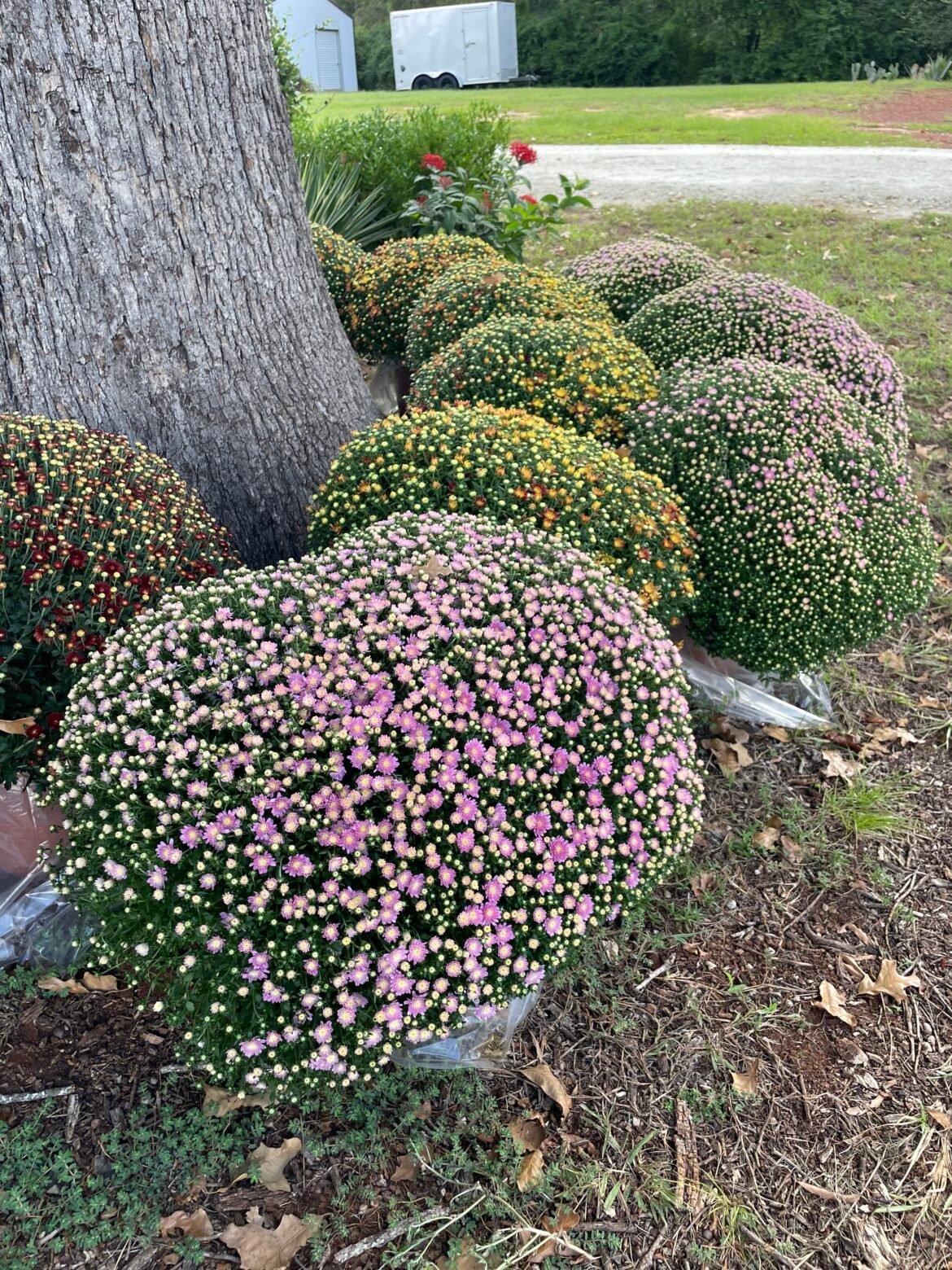
Chrysanthemums are among the best plants for adding dependable color to the East Texas fall garden. Garden mums come in a tremendous range of flower forms and colors, including the bronze, purple, red, white, and yellow varieties commonly sold for fall displays. In East Texas, chrysanthemums can be grown as seasonal color or planted into the landscape for perennial performance.
Quick Care Guide
Light: 6-8 hours of sun, with some protection from intense afternoon heat if necessary
Soil: Rich, well-drained soil with good organic matter
Water: Keep evenly moist, but do not keep the roots saturated
Fertilizer: Feed during active spring and summer growth; reduce feeding as flowering approaches
Pruning: Pinch back during spring and early summer to create a compact, bushy plant
Best Planting Time: Spring for establishment as a perennial; fall for immediate seasonal color
Cold Hardiness: Garden mums generally overwinter well in East Texas
Overview
Chrysanthemum × morifolium, commonly called garden mum or hardy mum, is a perennial flowering plant that produces a spectacular display of flowers in the fall. Hundreds of cultivars are available, with differences in flower color, flower form, plant size, and blooming time.
Although mums are often purchased in full bloom during September and October, the plants have actually been growing for months before flowering. Good cultural practices during spring and summer are therefore important for producing compact, sturdy plants covered with flowers in the fall.
Garden mums are well suited to East Texas because they tolerate the region’s heat and generally overwinter successfully when planted in a suitable location.
Light Requirements
Plant chrysanthemums in full sun whenever possible. A location receiving approximately six hours or more of direct sunlight will generally produce the best growth and flowering.
In East Texas, some protection from the hottest afternoon sun can be useful, particularly when the plant is growing beside a heat-reflective wall or in an especially hot location. Too much shade, however, can cause mums to become tall and weak rather than compact and upright.
Morning sun with light afternoon shade can be an excellent arrangement for container-grown mums during the hottest part of the season.
Soil & Planting
Chrysanthemums perform best in fertile, well-drained soil. East Texas soils can be acidic and, depending on the site, may range from sandy to heavy clay. Good drainage is particularly important because constantly saturated soil can cause root problems.
Before planting, loosen the soil and incorporate mature compost when appropriate. Do not place a mum into a planting hole that remains filled with water after rain.
When planting a potted mum, dig the hole approximately as deep as the root ball and somewhat wider. Set the plant at approximately the same depth at which it was growing in the container. Water thoroughly after planting.
Applying a layer of organic mulch around the plant can help moderate soil temperature and conserve moisture. Keep mulch a few inches away from the crown of the plant.
Watering
Keep newly planted mums consistently moist while they establish. Once established, chrysanthemums are considerably more tolerant of short periods of dryness, but they will perform best when they do not repeatedly wilt.
Water deeply when the upper portion of the soil begins to dry rather than giving the plant frequent shallow sprinklings. Container-grown mums usually require more frequent watering than plants growing in the landscape.
Avoid keeping the soil constantly saturated. Good drainage is just as important as adequate moisture.
Fertilizing
Chrysanthemums benefit from regular nutrition while they are actively growing.
A balanced slow-release fertilizer can be applied in spring as new growth begins, followed by additional feeding during the growing season according to the fertilizer label. Garden mums grown specifically for fall flowering should generally receive their heavier nutrition during the vegetative growth period rather than excessive nitrogen late in the season.
Do not continue pushing soft new growth with heavy nitrogen applications as winter approaches. East Texas plants need time to mature and prepare for winter.
Pruning & Pinching
Pruning is one of the most important parts of growing attractive garden mums.
During spring and early summer, pinch or trim the growing tips periodically to encourage branching. This produces a fuller plant with more flowering stems rather than one dominated by a few long shoots.
Pinching should stop by approximately mid-August for plants intended to bloom naturally in the fall. Later pruning can remove developing flower buds and delay or reduce flowering.
After flowering has finished, the old flower stems can be left in place through winter and cut back before vigorous new spring growth begins.
Seasonal Care in East Texas
Winter: Established garden mums generally tolerate East Texas winters. Leave some old growth through the coldest part of winter, then remove dead material before new spring growth begins.
Spring: This is the most important time for establishing a perennial mum. Fertilize, water as needed, and begin pinching new shoots once the plant is actively growing.
Summer: Continue regular watering and occasional feeding. Protect newly planted mums from severe drought and avoid allowing containers to dry completely.
Fall: Flowering usually occurs as day length and temperatures change. Keep plants watered while they are flowering to prolong the display.
Nacogdoches averages an earliest fall 32°F date around November 16, so fall-grown mums may remain attractive for weeks before a significant freeze occurs.
Growing Chrysanthemums in Containers
Mums grow extremely well in containers. Use a high-quality potting mix that drains freely, and choose a container with drainage holes.
Container mums dry out faster than landscape plants, particularly during warm East Texas weather. Check the soil regularly and water thoroughly when necessary.
Large decorative mums can be planted into larger containers or combined with complementary fall plants for seasonal displays.
Pests & Diseases
Common problems can include aphids, spider mites, thrips, caterpillars, and various fungal or bacterial diseases.
Good air circulation, adequate sunlight, proper spacing, and avoiding unnecessary overhead irrigation can help reduce disease problems.
Inspect plants regularly, especially when bringing greenhouse-grown mums home.
Where to Find Quality Chrysanthemums
Gen1 Greenhouse offers chrysanthemums in a variety of colors and sizes for East Texas fall gardens, containers, and seasonal displays.
Other Care Guides
See our other Gen1 Greenhouse care guides for additional information on growing flowering plants and landscape ornamentals in East Texas.