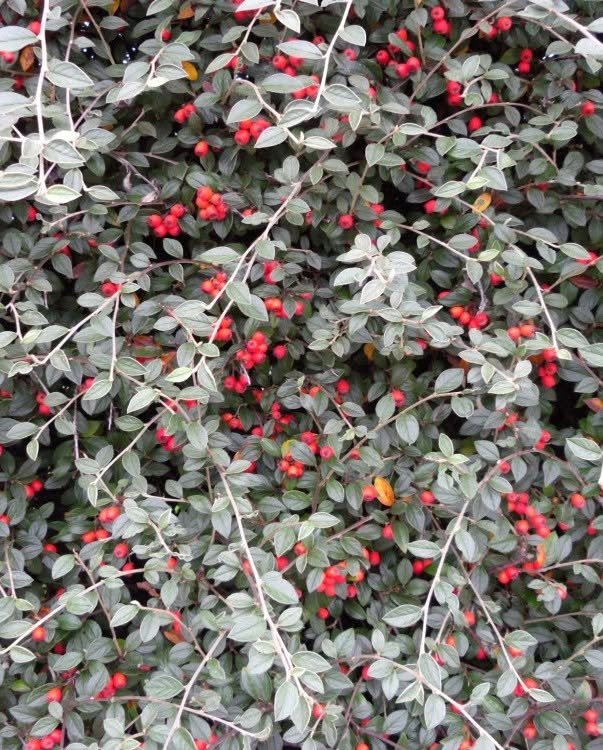
Glaucous cotoneaster is an evergreen to semi-evergreen ornamental shrub valued for its foliage, flowers, and colorful berries.
Quick Care Guide
Light: Full sun to partial shade
Soil: Well-drained soil
Water: Moderate
Fertilizer: Light annual feeding
Pruning: After flowering or as needed
Best Use: Shrub borders, slopes, specimen plantings
Cold Protection: Protect young plants during severe freezes
Overview
Cotoneaster species vary considerably in size and habit, but glaucous-leaved forms are generally grown for their evergreen foliage, small spring flowers, and colorful fruits.
Light Requirements
Full sun is preferred for dense growth and good flowering and fruiting.
Some afternoon shade is acceptable in East Texas.
Soil & Planting
Provide soil that drains well.
Avoid permanently wet locations. Incorporate organic material where necessary to improve planting conditions, particularly in compacted clay.
Watering
Water regularly during establishment.
Once mature, water during prolonged drought, but avoid maintaining a constantly saturated root zone.
Fertilizing
Apply a balanced fertilizer lightly in spring if needed.
Overfertilization is unnecessary.
Pruning
Prune lightly to maintain the desired form.
Remove dead, damaged, or crossing branches and perform heavier shaping after flowering when necessary.
Seasonal Care in East Texas
Winter: Evergreen or semi-evergreen foliage provides structure.
Spring: Flowers appear and new growth begins.
Summer: Water during drought.
Fall: Colorful fruits provide additional landscape interest.
Pests & Diseases
Monitor for scale insects, aphids, mites, and fungal leaf problems. Good air circulation and appropriate irrigation practices are helpful.
Where to Find Quality Cotoneaster
Gen1 Greenhouse offers glaucous cotoneaster for East Texas landscape use.
Other Care Guides
See our other Gen1 Greenhouse guides for evergreen shrubs and low-maintenance landscape plants.