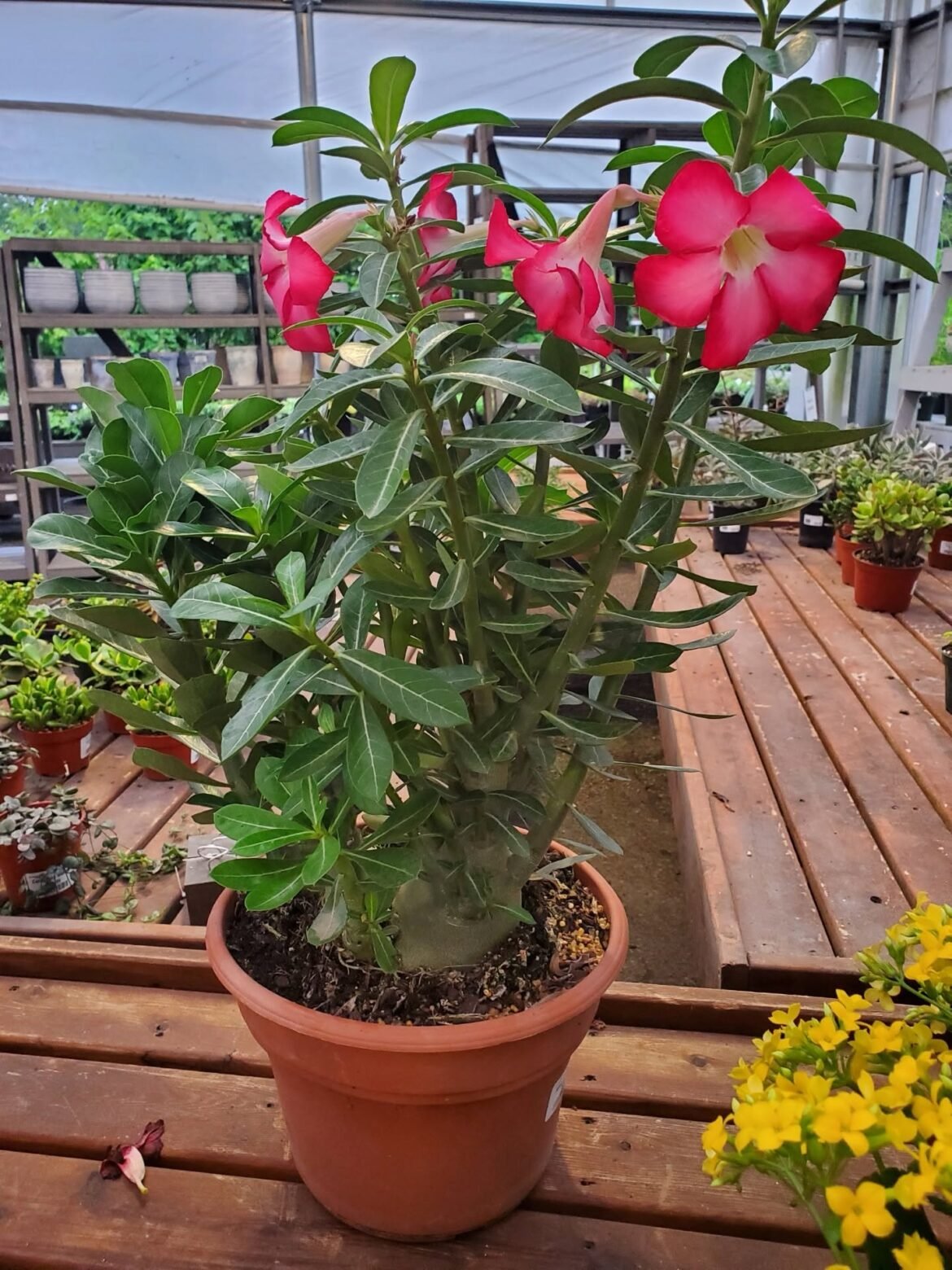
Adenium obesum, commonly called desert rose, is a succulent flowering plant prized for its swollen trunk, attractive foliage, and colorful flowers. In East Texas it should be treated primarily as a container plant.
Quick Care Guide
Light: Full sun
Soil: Very well-drained cactus or succulent soil
Water: Allow soil to dry between waterings
Fertilizer: Feed during spring and active growth
Pruning: As needed for shape
Best Use: Containers, patios, houseplants
Cold Tolerance: Bring indoors well before cold weather
Overview
Desert rose develops a thick caudex and branches carrying clusters of leaves and brightly colored flowers. It is naturally adapted to hot, dry climates.
Light Requirements
Provide full sun.
The strongest flowering occurs when the plant receives abundant direct sunlight.
Soil & Planting
Use a gritty, fast-draining cactus or succulent mix.
A container must have several drainage holes.
Never place desert rose into heavy soil that stays wet.
Watering
Allow the soil to dry substantially between waterings.
During active growth, water thoroughly and then allow excess water to drain completely. During dormancy, reduce watering substantially.
Fertilizing
Apply fertilizer during spring and active growth.
Avoid fertilizing a dormant plant heavily.
Pruning
Prune to maintain the desired shape and encourage branching.
Allow cut surfaces to dry before exposing the plant to heavy moisture.
Seasonal Care in East Texas
Winter: Move indoors once nighttime temperatures begin approaching approximately 55°F.
Spring: Increase watering and resume fertilizer as new growth begins.
Summer: Place outdoors in full sun and water as needed.
Fall: Reduce watering and move indoors before cold weather.
Safety
Adenium has poisonous sap and should not be eaten. Its sap can also irritate the skin.
Pests & Diseases
Aphids, scale, mealybugs, and fungal leaf spots may occur. Wet soil can cause root rot.
Where to Find Quality Adenium
Gen1 Greenhouse offers Adenium obesum in decorative containers for East Texas patios and indoor collections.
Other Care Guides
See our other Gen1 Greenhouse guides for succulents and tropical container plants.