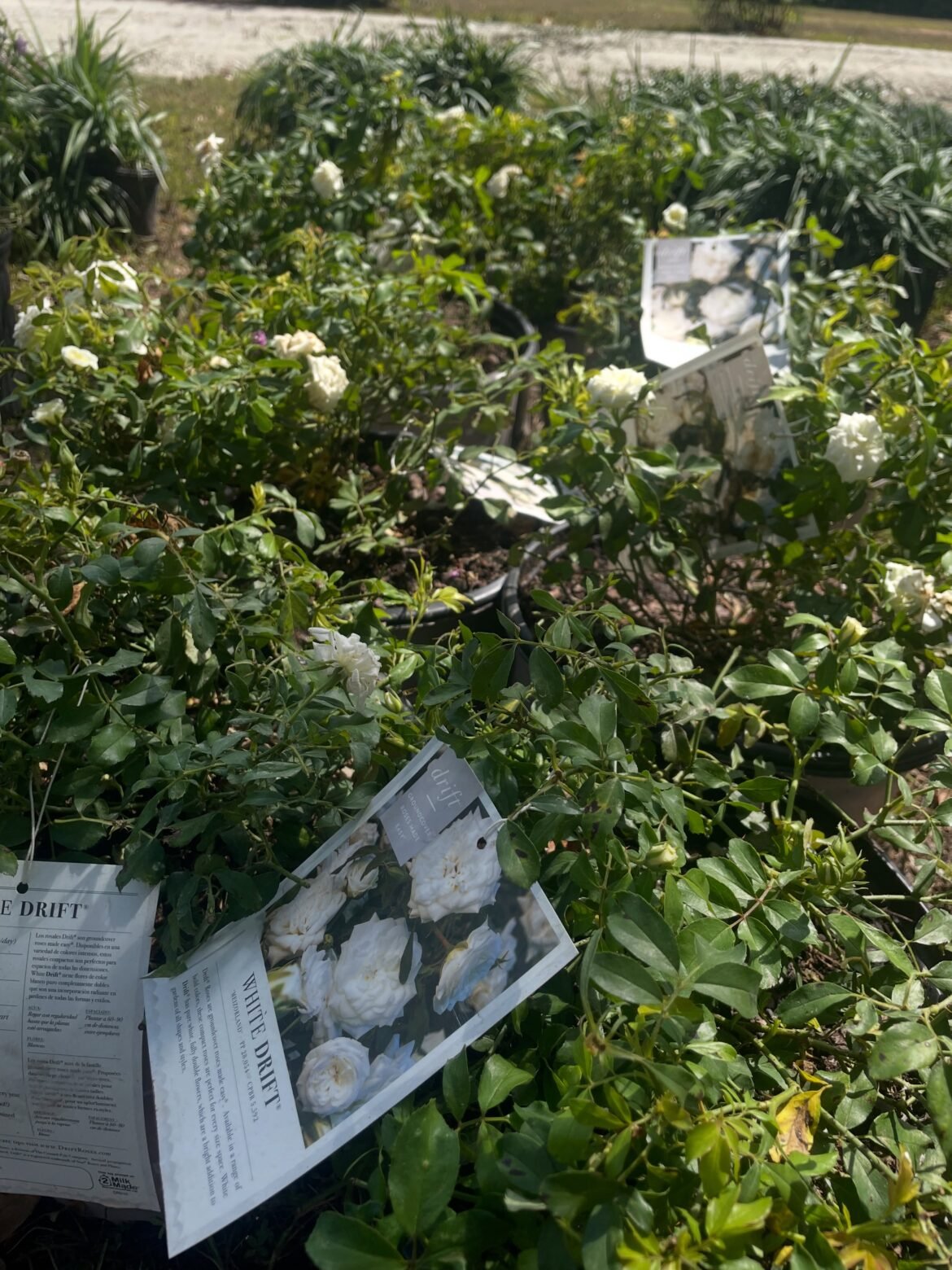
Drift roses are compact landscape roses developed primarily for groundcover use. They are useful for borders, mass plantings, slopes, containers, and small landscape areas where a conventional large rose would become oversized.
Gen1 Greenhouse offers pink and white Drift roses.
Quick Care Guide
Light: Full sun
Soil: Fertile, well-drained soil
Water: Regularly while establishing
Fertilizer: Regular rose fertilizer during active growth
Pruning: Late winter or early spring and light shaping afterward
Best Use: Borders, groundcover, containers, mass plantings
Cold Hardiness: Excellent across much of the United States
Overview
Drift roses are compact, spreading roses that combine the flowering ability of landscape roses with a smaller growth habit. They are bred for repeated flowering and compact growth. Drift roses are generally approximately 1½ feet tall and 2 feet wide, depending on cultivar.
Light Requirements
Full sun is essential for the best flowering.
Provide at least six hours of direct sunlight. Morning sun followed by substantial afternoon shade will usually produce fewer flowers and weaker growth.
Soil & Planting
Use fertile, well-drained soil.
Prepare compacted East Texas clay before planting and avoid locations where irrigation or rainfall leaves the root zone constantly saturated.
Watering
Water deeply and consistently while roses become established.
Once established, water thoroughly during extended dry periods.
Water near the base of the plant when possible to reduce prolonged leaf wetness.
Fertilizing
Use a fertilizer formulated for roses during the active growing season.
A spring feeding followed by additional applications according to the fertilizer label can support repeated flowering.
Avoid excessive nitrogen.
Pruning
Late winter or early spring is an excellent time for structural pruning.
Remove dead or damaged wood and trim plants to maintain a compact shape. During the growing season, remove spent flowers and excessively long shoots as necessary.
Seasonal Care in East Texas
Winter: Roses are generally dormant or semi-dormant.
Spring: Perform major pruning and begin regular feeding and watering.
Summer: Maintain moisture during hot weather and monitor for fungal disease.
Fall: Continue flowering and clean up fallen foliage.
Pests & Diseases
Watch for black spot, powdery mildew, aphids, spider mites, and other common rose pests.
Good air circulation, adequate sunlight, proper spacing, and watering at the base of the plant can help reduce disease pressure.
Where to Find Quality Drift Roses
Gen1 Greenhouse offers pink and white Drift roses for East Texas landscapes.
Other Care Guides
See our other Gen1 Greenhouse care guides for roses and flowering landscape shrubs.