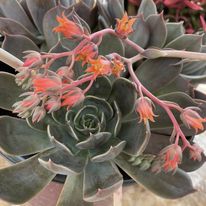
Echeveria is one of the most popular genera of succulent plants, prized for its beautiful rosette-shaped foliage, wide range of colors, and relatively easy care. Native primarily to Mexico, Echeveria includes many species, hybrids, and cultivars ranging from compact, symmetrical rosettes to larger plants with elongated stems.
Echeveria is an excellent choice for succulent gardens, containers, rock gardens, windowsills, and other locations with plenty of sunlight and excellent drainage. With the right growing conditions, these succulents can remain compact, colorful, and healthy for many years.
Echeveria Care at a Glance
Light: 6–8 hours of bright light daily; several hours of direct sunlight is ideal.
Water: Water thoroughly when the soil has dried out completely. Reduce watering during cool or dormant periods.
Soil: Use a very well-draining succulent or cactus mix.
Temperature: Echeveria prefers warm conditions and is generally not tolerant of prolonged freezing temperatures.
Fertilizer: Fertilize lightly during active growth with a diluted, balanced or succulent fertilizer.
Propagation: Echeveria can be propagated from offsets, leaves, stem cuttings, and seeds, depending on the species or cultivar.
Best Use: Containers, succulent gardens, rock gardens, windowsills, and protected outdoor plantings.
About Echeveria
Echeveria is a genus in the Crassulaceae family containing a diverse group of succulent plants. Most Echeveria are recognized by their attractive rosettes of fleshy leaves, although their growth habits vary considerably between species and hybrids.
Many Echeveria species are native to Mexico, where they occur in habitats ranging from dry shrublands and deserts to seasonally dry tropical environments.
Their compact rosettes and attractive foliage have made Echeveria especially popular among succulent collectors and gardeners. Many cultivated varieties also develop red, pink, orange, purple, blue-green, or otherwise colorful leaf margins when grown under strong light.
Echeveria is sometimes confused with other rosette-forming succulents, particularly Sempervivum. Although the two can look similar, they belong to different genera and have different growing characteristics.
Echeveria Hardiness
Echeveria is best suited to warm climates and generally performs well in USDA Zones 9–11, although cold tolerance varies considerably among species and hybrids.
Echeveria can tolerate some cool temperatures, particularly when kept dry, but prolonged exposure to freezing temperatures can cause serious damage or kill the plant. In climates that regularly experience freezing weather, growing Echeveria in containers makes it easier to move the plants into a protected location during winter.
Here in East Texas, Echeveria can often be grown outdoors for much of the year, but winter freezes require additional protection. During periods of freezing weather, move container-grown plants into a protected area or provide appropriate frost protection.
Light Requirements for Echeveria
Echeveria grows best with approximately 6–8 hours of bright light each day. Several hours of direct sunlight is usually beneficial for maintaining a compact rosette and bringing out the natural colors of the foliage.
When Echeveria does not receive enough light, it may begin to stretch toward the light source. This is called etiolation. The rosette becomes more open, the stem elongates, and the plant may lose some of its characteristic coloration.
A bright windowsill can work well for Echeveria if it receives sufficient direct sunlight. However, many indoor locations do not provide enough light for Echeveria to maintain strong, compact growth. A grow light may be necessary when natural sunlight is insufficient.
When moving an Echeveria from low light into strong outdoor sunlight, gradually increase its exposure. Sudden exposure to intense sunlight can cause sunburn, particularly if the plant has been grown indoors or under shade.
If an Echeveria has become severely stretched, pruning or beheading the rosette can be used to restart the plant. The healthy top portion can be rooted as a cutting while the remaining stem may produce new growth.
Soil and Planting
Good drainage is one of the most important requirements for growing healthy Echeveria.
These succulents should be planted in a loose, porous growing medium that allows excess water to drain quickly. A quality commercial cactus or succulent mix can work well. If using a standard potting mix, adding materials such as coarse perlite, pumice, or other drainage amendments can improve its structure.
Avoid heavy soils that remain wet for long periods. Echeveria stores water in its leaves, so constantly wet soil can create conditions that encourage root and stem rot.
Containers should always have drainage holes. Decorative containers without drainage can be used as outer pots, but Echeveria should remain planted in a container that allows excess water to escape.
When planting Echeveria, avoid burying the rosette or allowing the lower leaves to remain in constant contact with wet soil.
Watering Echeveria
Proper watering is one of the most important parts of Echeveria care.
Rather than watering according to a strict calendar, allow the soil to dry completely between waterings. When it is time to water, thoroughly soak the soil and allow the excess water to drain from the bottom of the container.
The amount of time between waterings will depend on temperature, sunlight, soil, container size, and humidity. During hot, actively growing periods, Echeveria may need water more frequently. During cool weather or periods of slow growth, the soil may remain dry for considerably longer.
Avoid repeatedly giving Echeveria small amounts of water. Thorough watering followed by a period of drying is generally preferable to keeping the soil constantly damp.
Overwatering is one of the most common causes of problems with Echeveria. Symptoms of excessive moisture can include yellowing leaves, soft or translucent foliage, and root or stem rot.
When possible, water the soil rather than repeatedly soaking the center of the rosette. Allowing water to remain trapped between the leaves can increase the risk of problems, particularly when temperatures are cool or air circulation is poor.
Fertilizing Echeveria
Echeveria does not require heavy fertilization. Too much fertilizer can cause excessive, weak growth and may damage the roots.
During active growth, Echeveria can benefit from occasional applications of a balanced fertilizer or a fertilizer formulated for cacti and succulents. Diluting the fertilizer according to the product’s instructions, or using a weaker concentration, is generally preferable to heavy feeding.
Do not fertilize stressed, recently transplanted, or dormant plants. Allow the plant to establish itself before beginning a regular fertilization program.
Propagating Echeveria
One of the most enjoyable aspects of growing Echeveria is how easily many varieties can be propagated.
Depending on the species or cultivar, Echeveria can be propagated by offsets, leaves, stem cuttings, or seeds.
Propagating Echeveria from Offsets
Many Echeveria produce offsets, or small plants, around the base of a mature rosette.
Once an offset has developed enough of its own root system, it can be carefully separated from the parent plant and planted in its own container. Allowing any damaged areas to dry and callus before planting can help reduce the risk of rot.
Propagating Echeveria from Leaves
Leaf propagation is another popular method. Select a healthy, mature leaf and carefully remove it from the stem, attempting to detach the entire leaf rather than breaking it.
Allow the leaf to callus for several days, then place it on top of a well-draining growing medium. With suitable conditions, roots and eventually a small rosette may develop from the base of the leaf.
Not every leaf will successfully produce a new plant, and some Echeveria varieties are much more reliable from leaf cuttings than others.
Propagating Echeveria from Stem Cuttings
If an Echeveria has become stretched or leggy, the rosette can often be cut from the elongated stem and rooted as a cutting.
This method is particularly useful for rejuvenating plants that have not received enough light. The remaining stem may also produce new offsets.
For more information about propagating succulents, see our Succulent Propagation Guide.
Common Echeveria Problems
Most Echeveria problems can be traced back to one of three factors: insufficient light, excessive moisture, or poor drainage.
Leggy growth: Usually indicates insufficient light. Move the plant to a brighter location and gradually increase direct sunlight.
Loss of color: Many Echeveria develop their strongest colors under bright light. Low light can result in greener, less colorful foliage.
Soft or yellow leaves: Often associated with excessive moisture or poor drainage. Check the soil and roots for signs of rot.
Shriveled leaves: Can indicate that the plant needs water, although some lower-leaf shriveling is normal as Echeveria replaces older foliage.
Sunburn: Brown or pale patches can occur when a plant that has been grown in low light is suddenly exposed to intense sunlight. Acclimate plants gradually.
Growing Echeveria in East Texas
Echeveria can be an excellent addition to an East Texas succulent collection, but the region’s hot summers, high humidity, heavy rainfall, and occasional winter freezes require some consideration.
During the warm growing season, provide Echeveria with plenty of sunlight and excellent drainage. Container-grown plants are especially useful because they can be moved to a protected location when extended periods of rain or freezing temperatures are expected.
Avoid placing Echeveria where water collects after heavy rain. A raised container, well-draining garden bed, or protected patio can provide much better growing conditions than heavy, poorly drained soil.
During winter, protect Echeveria from prolonged freezing temperatures. Keeping plants relatively dry during cold weather is especially important because cold, wet conditions can encourage rot.
Where to Find Quality Echeveria
At Gen1 Greenhouse, we enjoy growing and propagating a variety of succulents, including Echeveria. Our selection changes throughout the year as plants become available.
Whether you are looking for a single Echeveria for a windowsill, a colorful addition to a succulent arrangement, or plants to expand your collection, check our current inventory for availability.
Conclusion
Echeveria is an excellent succulent genus for both beginning gardeners and experienced collectors. Its attractive rosettes, wide variety of colors and forms, and relatively simple care requirements make it one of the most rewarding succulents to grow.
The keys to successful Echeveria care are simple: provide plenty of light, use extremely well-draining soil, allow the soil to dry between waterings, and protect the plants from prolonged freezing temperatures. With these conditions, Echeveria can remain healthy and attractive for years while producing offsets and new plants to expand your collection.