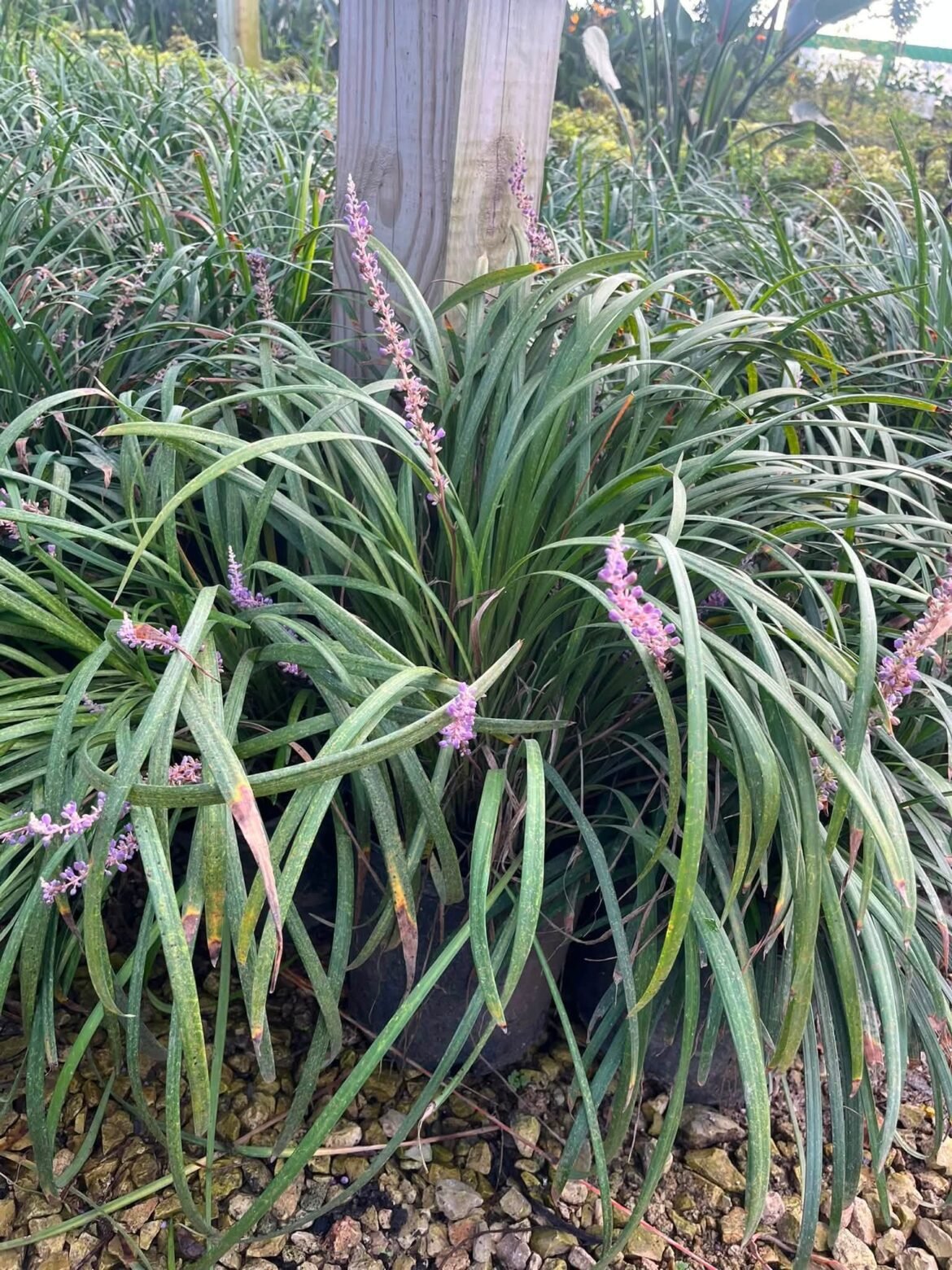
Liriope is one of the most dependable evergreen groundcovers for East Texas. Often called lilyturf or monkey grass, Liriope forms dense clumps of narrow foliage and produces attractive flower spikes in summer and early fall.
The Gen1 Greenhouse inventory includes several Liriope selections, including Big Blue, Dwarf, Regular, Royal Purple, Spicata, and Super Blue forms.
Quick Care Guide
Light: Full sun to shade, depending on variety
Soil: Well-drained soil
Water: Moderate; drought tolerant once established
Fertilizer: Light annual feeding
Pruning: Cut back old foliage in late winter or early spring
Best Use: Edging, groundcover, slopes, borders, and shaded landscapes
Cold Hardiness: Excellent for East Texas
Overview
Liriope is an evergreen perennial that resembles ornamental grass but is not actually a true grass. It forms dense clumps or, in the case of spreading types, colonies through underground rhizomes.
Liriope muscari selections such as ‘Big Blue’ are generally clumping plants, while Liriope spicata is more strongly spreading.
This distinction is important when choosing plants for a landscape. A clumping selection is generally preferable where you want a defined border, while a spreading species can be useful when the goal is rapid groundcover.
Light Requirements
Liriope is highly adaptable.
Many cultivars perform well in full sun, partial shade, or filtered shade. In very deep shade, growth may become thinner and slower.
In East Texas, Liriope is particularly valuable under trees and in locations where many flowering plants struggle with reduced sunlight.
‘Big Blue’ performs well from full sun to part shade and retains evergreen foliage in warm climates.
Soil & Planting
Plant Liriope in well-drained soil.
It tolerates a variety of soil types but performs best when the soil drains adequately. Improve extremely compacted East Texas clay before planting if water remains around the roots after rain.
When planting as an edging or groundcover, space individual plants according to the desired mature coverage rather than placing every plant immediately against the next.
Watering
Water newly planted Liriope regularly until established.
Once established, it is relatively drought tolerant and does not normally require constant irrigation.
During prolonged East Texas drought, deep supplemental watering can prevent foliage from becoming dry or brown.
Avoid continually saturated soil.
Fertilizing
Liriope requires relatively little fertilizer.
A balanced fertilizer applied in spring can support healthy growth. Plants growing in fertile soil may require even less supplemental nutrition.
Avoid excessive fertilizer because lush, soft growth is not necessary for this low-maintenance groundcover.
Pruning & Maintenance
Old foliage can be cut back in late winter or early spring before new growth begins.
Large established plantings can even be mowed at an appropriate height to remove old foliage, although smaller landscape beds are usually easier to maintain with shears.
Do not repeatedly scalp plants during active growth. The objective is to remove old foliage before the spring growth flush.
Seasonal Care in East Texas
Winter: Most Liriope remains evergreen in East Texas. Some foliage may become weathered or damaged after unusually cold weather.
Spring: Remove damaged old foliage before new growth begins. Apply fertilizer if needed.
Summer: Plants generally require little care after establishment. Water during prolonged drought.
Fall: Flower spikes and dark berries can provide additional seasonal interest.
Choosing Between Liriope Types
Clumping forms such as Liriope muscari are excellent for borders, edging, and defined planting beds.
Liriope spicata has a more aggressive spreading habit and is more appropriate where a spreading groundcover is desired.
The difference is significant enough that gardeners should know which type they are planting rather than treating every “monkey grass” as identical.
Growing Liriope in Containers
Liriope can be grown successfully in containers.
Use a high-quality potting mix and a container with adequate drainage. Container-grown plants may need more frequent watering than landscape plantings.
Compact forms can make attractive accents in mixed planters.
Pests & Diseases
Liriope is generally low maintenance, although slugs, snails, root and crown rots, and leaf diseases can occasionally occur.
Poor drainage is one of the easiest problems to prevent.
Where to Find Quality Liriope
Gen1 Greenhouse offers multiple Liriope selections for East Texas landscapes, including Big Blue, Dwarf, Regular, Royal Purple, Spicata, and Super Blue forms.
Other Care Guides
See our other Gen1 Greenhouse care guides for information on evergreen groundcovers, shade plants, and low-maintenance landscape plants suitable for East Texas.