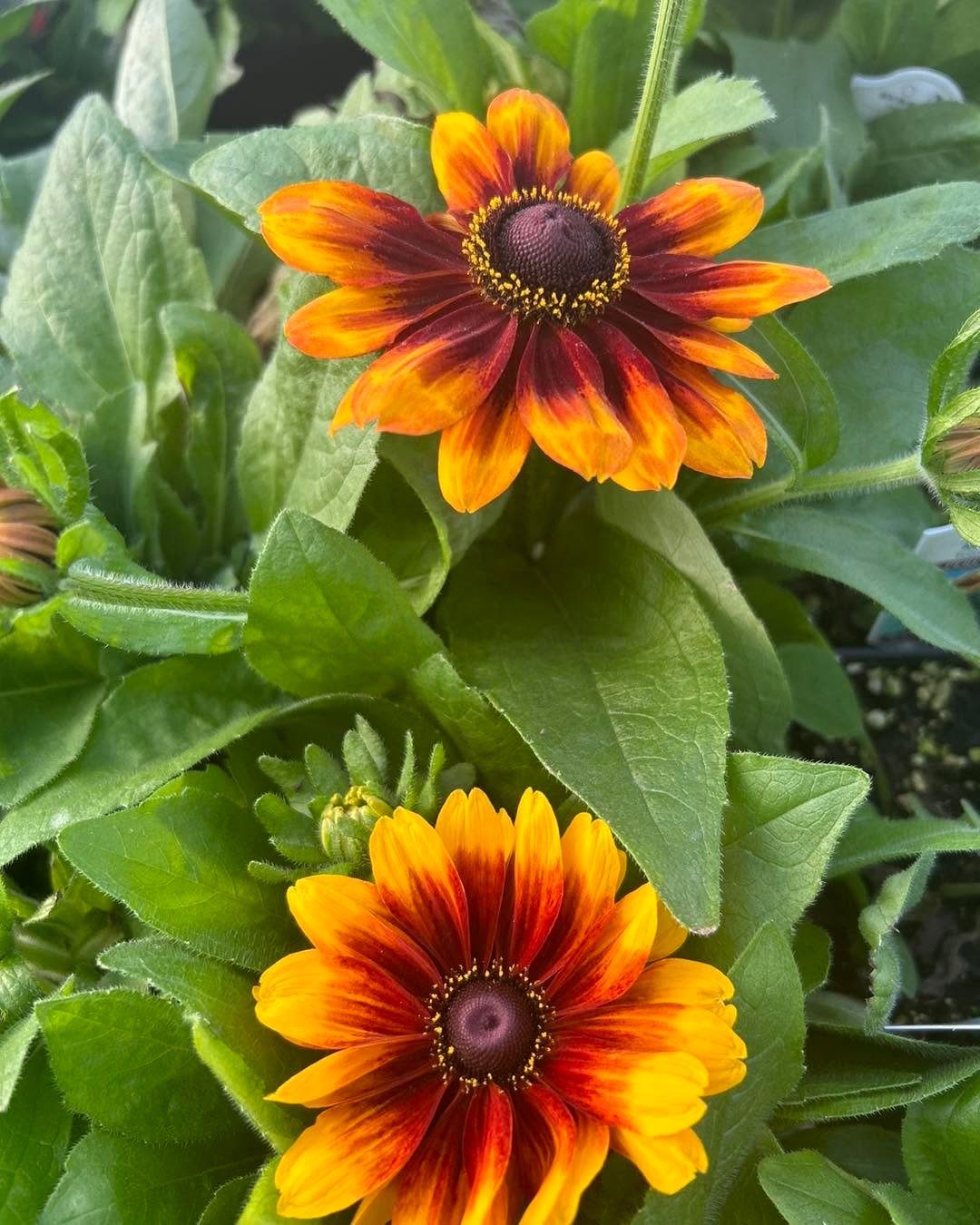
Rudbeckia is one of the most recognizable summer flowering plants, producing cheerful yellow or golden flowers with dark centers. The ‘Indian Summer’ selection is especially striking because of its large flowers.
Quick Care Guide
Light: Full sun
Soil: Well-drained soil
Water: Moderate; drought tolerant once established
Fertilizer: Moderate fertility
Pruning: Deadhead to extend flowering
Best Planting Time: Spring or fall
Special Benefit: Excellent pollinator plant
Overview
Rudbeckia includes several species and cultivated forms commonly known as black-eyed Susans. Rudbeckia hirta is a fast-growing biennial or short-lived perennial that can bloom during its first year under favorable conditions.
Rudbeckia is well suited to East Texas gardens because it tolerates heat and can continue blooming through much of summer.
Light Requirements
Full sun is best.
Six or more hours of direct sunlight will encourage sturdy growth and abundant flowering. Some afternoon shade is tolerated, but heavy shade reduces flowering.
Soil & Planting
Rudbeckia adapts to clay, loam, and sandy soils as long as drainage is adequate. Moderate fertility is generally preferable to extremely fertile soil.
East Texas clay should be improved where drainage is poor.
Watering
Water regularly while plants establish.
Established Rudbeckia can tolerate periods of drought, but flowering will be better when the plant receives adequate moisture during extended dry spells.
Fertilizing
Moderate fertility is sufficient.
Avoid excessive nitrogen. Overfertilized plants may produce excessive foliage rather than the balanced flowering habit desired in a flowerbed.
Deadheading
Remove faded flowers to encourage additional blooms.
If you want Rudbeckia to reseed naturally, leave some mature flower heads in place toward the end of the growing season.
Seasonal Care in East Texas
Winter: Depending on species and winter conditions, Rudbeckia may survive as a perennial or reseed from previous flowers.
Spring: Remove old growth and begin watering as new growth appears.
Summer: Enjoy the primary flowering period and water during drought.
Fall: Leave selected seed heads standing if you want natural reseeding.
Rudbeckia flowers generally begin appearing in midsummer and can continue toward the middle of fall with good care.
Pests & Diseases
Rudbeckia can occasionally develop powdery mildew and may be bothered by slugs and snails. Good air circulation and proper spacing can help reduce foliage problems.
Where to Find Quality Rudbeckia
Gen1 Greenhouse offers Rudbeckia selections for sunny East Texas flowerbeds and pollinator gardens.
Other Care Guides
See our other Gen1 Greenhouse care guides for additional pollinator-friendly flowering plants.