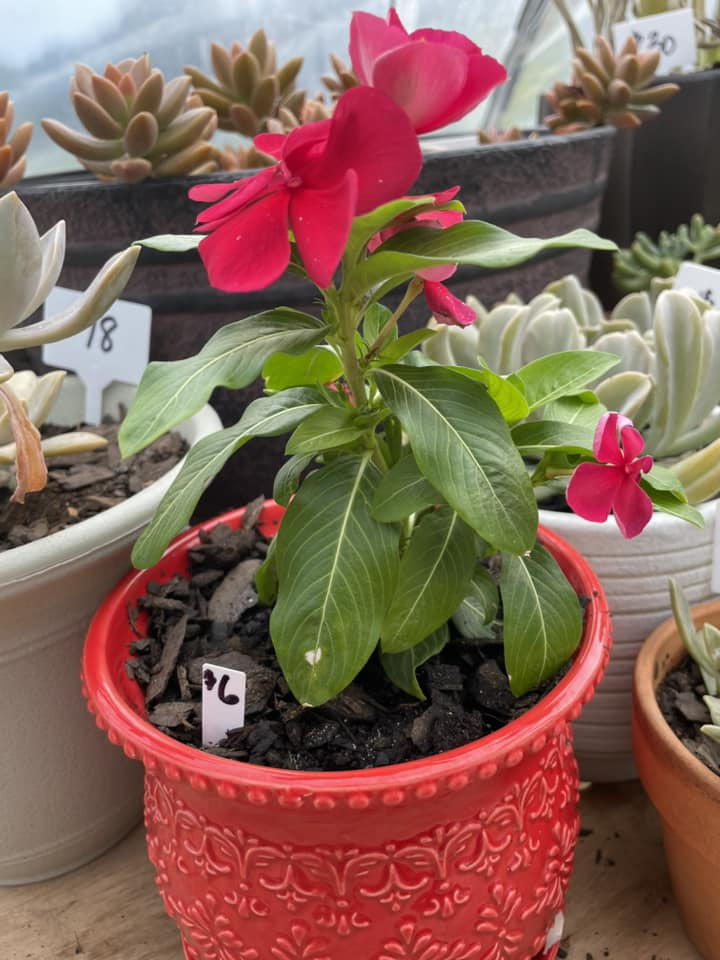
Catharanthus roseus is commonly sold as annual vinca or Madagascar periwinkle. It is one of the best flowering annuals for hot weather and is particularly useful in East Texas because it tolerates heat, bright sunlight, and periods of dryness once established.
The Cascade Cora series represented in the Gen1 Greenhouse inventory is especially useful for containers and flowerbeds.
Quick Care Guide
Light: Full sun to partial shade
Soil: Well-drained soil
Water: Water regularly while establishing; allow soil to dry somewhat between waterings once established
Fertilizer: Light to moderate feeding
Pruning: Usually little pruning required
Best Planting Time: After danger of frost in spring
Cold Tolerance: Treat as an annual in East Texas
Overview
Catharanthus roseus is a tender perennial in warm climates but is generally grown as a warm-season annual in East Texas. Modern cultivars are typically compact, heavily branched, and continuously flowering.
Vinca is particularly valuable in hot summer landscapes because it generally handles heat and drought better than many other common annual bedding plants.
Light Requirements
Plant vinca in full sun whenever possible. At least six hours of direct sunlight generally produces the strongest growth and flowering.
Plants can tolerate partial shade, but heavy shade usually produces less flowering and weaker growth.
Morning sun with some afternoon protection can be useful for containers during exceptionally hot weather.
Soil & Planting
The most important soil characteristic for vinca is good drainage.
East Texas clay should be amended appropriately when needed to improve drainage. Raised beds and containers are particularly useful where the native soil remains wet after heavy rain.
When planting, space plants according to the mature size of the cultivar. Avoid crowding because dense, constantly wet foliage increases disease pressure.
Watering
Water newly planted vinca regularly while the root system develops.
Once established, allow the upper layer of soil to dry somewhat before watering again. Vinca is much more tolerant of short periods of dryness than of constantly wet roots.
Do not allow containers to sit in standing water.
Fertilizing
Apply a balanced slow-release fertilizer at planting or feed periodically with a diluted liquid fertilizer.
Vinca does not need excessive fertilization to flower well. Heavy nitrogen applications may produce more foliage at the expense of a balanced flowering display.
Pruning & Deadheading
Modern vinca cultivars generally maintain a compact habit without extensive pinching or deadheading.
If stems become excessively long or damaged, trim them lightly to restore the desired shape.
Seasonal Care in East Texas
Winter: Vinca is normally killed by freezing temperatures in East Texas and is treated as an annual.
Spring: Plant after the threat of significant frost has passed.
Summer: This is the primary growing season. Provide adequate moisture while avoiding saturated soil.
Fall: Plants may continue flowering well into autumn until temperatures become too cold.
Nacogdoches typically sees its earliest fall 32°F temperature around November 16, although individual years vary considerably.
Growing Vinca in Containers
Catharanthus roseus performs very well in containers. Use a well-drained commercial potting mix and a container with drainage holes.
Avoid planting vinca in containers that retain large amounts of water.
The trailing and spreading habit of cultivars such as the Cascade series can be particularly attractive in hanging baskets, window boxes, and mixed containers.
Pests & Diseases
Vinca is generally a relatively trouble-free summer annual, but fungal and root diseases can become serious when plants are overwatered or grown in poorly drained soil.
Good drainage, adequate spacing, and careful watering are among the most important preventative measures.
Where to Find Quality Catharanthus roseus
Gen1 Greenhouse offers vinca for East Texas flowerbeds and containers, including colorful Cascade Cora selections.
Other Care Guides
See our other Gen1 Greenhouse care guides for additional information on growing summer annuals in East Texas.