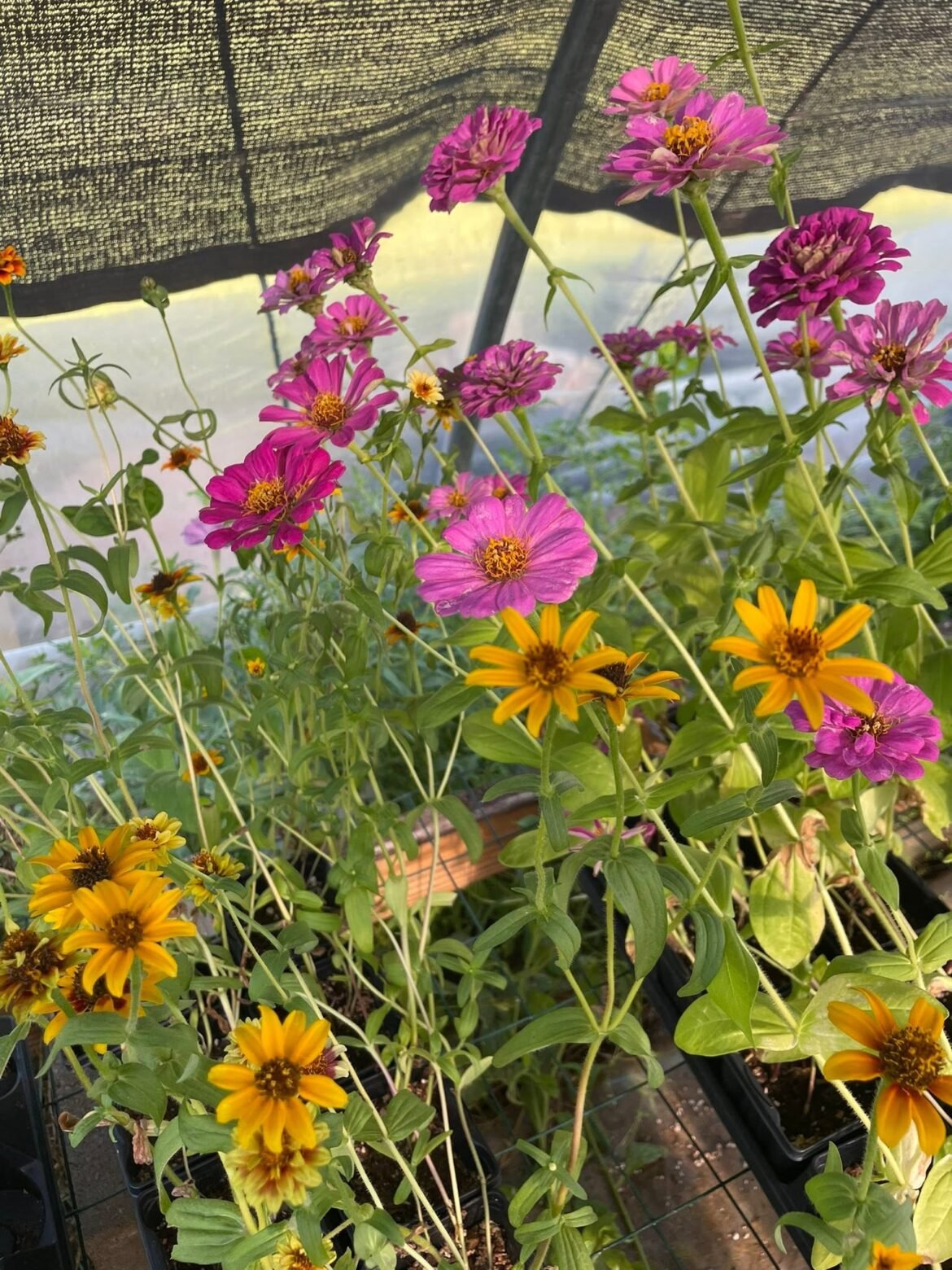
Zinnias are some of the easiest flowering annuals to grow in East Texas. They thrive in heat, bloom heavily during the warm season, attract pollinators, and are available in many colors and flower forms.
The Profusion, scarlet, and yellow zinnias commonly grown in East Texas are excellent choices for flowerbeds and containers.
Quick Care Guide
Light: Full sun
Soil: Fertile, well-drained soil
Water: Keep evenly moist while establishing; moderate once established
Fertilizer: Light to moderate feeding
Pruning: Deadhead for continued flowering; trim if necessary
Best Planting Time: Spring and early summer
Special Requirement: Good air circulation
Overview
Zinnias are warm-season annuals that thrive in sunlight and heat. They are particularly valuable in East Texas because they continue flowering through the summer while attracting bees and butterflies.
Many cultivars can provide color from late spring through autumn when given adequate sunlight and moisture.
Light Requirements
Plant zinnias in full sun.
At least six hours of direct sunlight is recommended, although more sunlight can produce strong growth and abundant flowering.
Avoid planting zinnias where surrounding vegetation creates dense shade or blocks air circulation.
Soil & Planting
Zinnias are not especially demanding about soil as long as it drains well.
In East Texas, improve heavy clay where necessary to create a loose, well-drained root zone. Raised beds are especially useful where drainage is poor.
Space plants so mature foliage is not tightly packed together. Good air movement is important because East Texas combines high summer heat and humidity, conditions that can encourage fungal leaf diseases.
Watering
Keep newly planted zinnias consistently moist until they become established.
After establishment, water deeply when needed rather than providing frequent shallow watering.
Avoid keeping the foliage wet for extended periods. Watering near the base of the plant is preferable.
Fertilizing
Zinnias generally do not require heavy fertilization.
A modest application of balanced fertilizer at planting can support healthy growth. Excessive nitrogen can cause excessive foliage and potentially reduce the balance between vegetative growth and flowering.
Deadheading & Pruning
Remove spent flowers to encourage continued flowering.
When seed is desired, allow some mature flower heads to remain and dry on the plant. Zinnias can be propagated from seed, and saving seed from open-pollinated plants can be a useful way to continue a favorite line.
Trim damaged or excessively crowded stems as necessary.
Seasonal Care in East Texas
Winter: Zinnias are warm-season annuals and are killed by freezing temperatures.
Spring: Plant after frost danger has passed and soil temperatures have warmed.
Summer: Maintain adequate moisture during drought and monitor the foliage for disease.
Fall: Zinnias can continue blooming until cold weather becomes limiting.
East Texas normally has a lengthy warm growing season, making zinnias particularly useful for summer and early fall color.
Growing Zinnias in Containers
Compact zinnia cultivars can perform well in containers.
Use a well-drained potting mix and place the container in full sun. Container-grown plants generally require more frequent watering than those planted in the landscape.
Avoid overcrowding multiple plants in a small container.
Pests & Diseases
Zinnias may occasionally be affected by aphids, caterpillars, spider mites, and fungal diseases.
Powdery mildew and leaf diseases become more likely when plants have poor air circulation or remain wet for extended periods. Selecting disease-resistant cultivars, providing full sun, and maintaining good spacing can help.
Where to Find Quality Zinnias
Gen1 Greenhouse offers colorful zinnias for East Texas gardens, including Profusion Cherry, scarlet, and yellow selections.
Other Care Guides
See our other Gen1 Greenhouse care guides for additional information on attracting pollinators and growing summer annuals in East Texas.