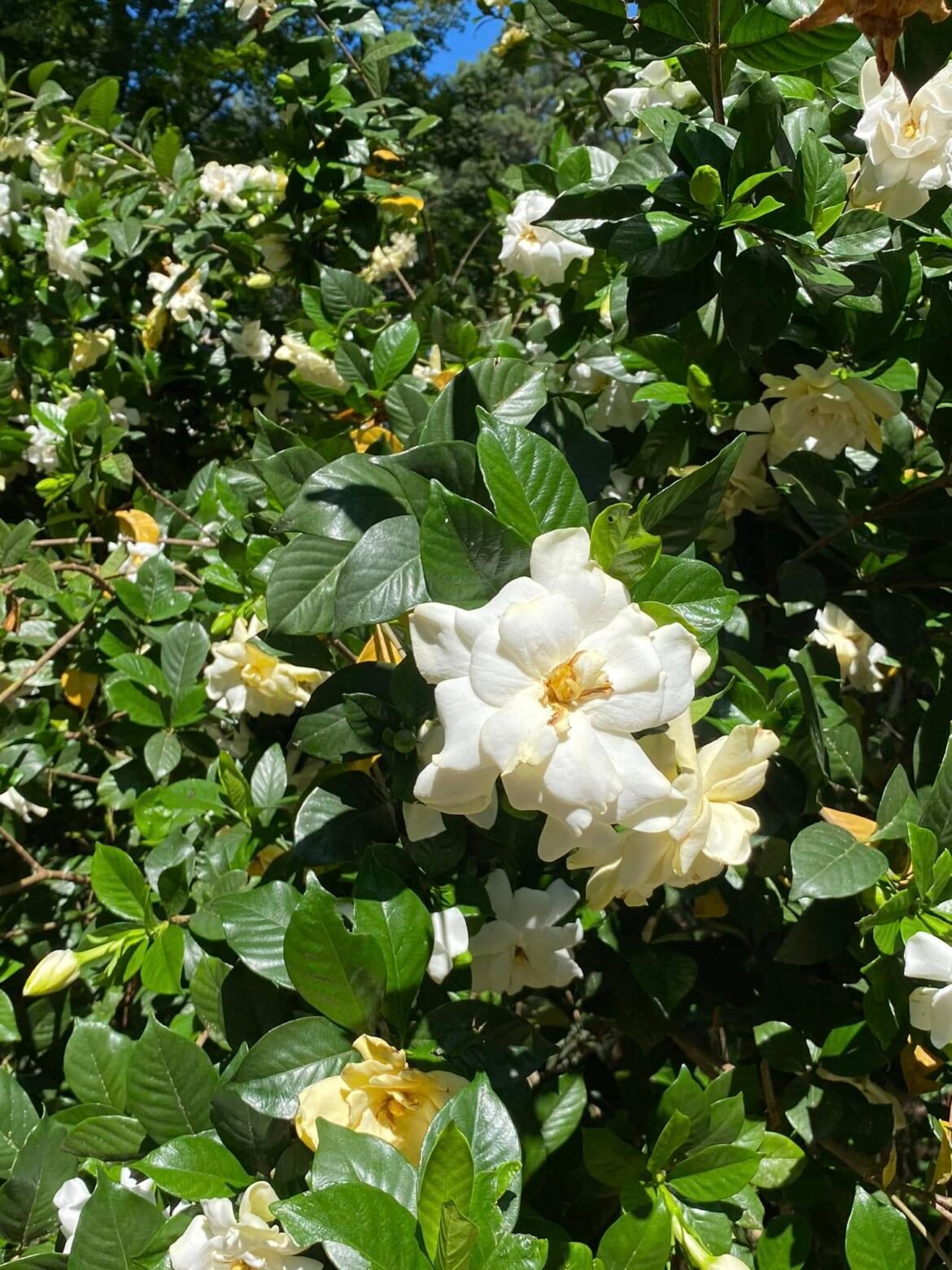
Gardenias are evergreen flowering shrubs prized for their glossy leaves and intensely fragrant white flowers. They are among the most desirable shrubs for East Texas landscapes, but they perform best when their requirements for soil acidity, moisture, and drainage are understood.
The Gen1 Greenhouse inventory includes ‘August Beauty’, ‘Frostproof’, and ‘Radicans’. These are all forms of Gardenia jasminoides, but they vary considerably in size and growth habit. ‘Radicans’ is a dwarf groundcover form, while ‘August Beauty’ can reach approximately 4 to 6 feet tall.
Quick Care Guide
Light: Full sun to partial shade
Soil: Acidic, rich, moist, well-drained soil
Water: Keep evenly moist; do not allow prolonged dryness
Fertilizer: Fertilizer for acid-loving plants
Pruning: Prune after flowering
Best Planting Time: Spring or fall
Important: Avoid alkaline soil
Overview
Gardenias are evergreen shrubs that produce fragrant white flowers during the warm season. They prefer acidic soil and consistent moisture, conditions that are important in East Texas landscapes.
Because the region’s soils are frequently acidic, gardenias can perform very well when planted in an appropriately prepared bed.
Light Requirements
Gardenias prefer full sun to partial shade.
Morning sun followed by afternoon shade can be particularly useful in East Texas because it supplies adequate light while reducing heat stress.
Too much shade can reduce flowering and encourage weak growth.
Soil & Planting
Gardenias require acidic, well-drained soil.
Do not plant gardenias into strongly alkaline soil or areas with poor drainage. A high-quality organic soil amendment can improve the planting area, but avoid creating a sharply contrasting pocket of amended soil surrounded by heavy native clay.
A thick layer of organic mulch can help conserve moisture and keep the root zone cooler.
Watering
Gardenias prefer consistently moist soil.
Do not allow them to repeatedly dry to the point of severe wilting. At the same time, constantly saturated soil can damage the roots.
Drip irrigation or another method that keeps water near the root zone is preferable to frequent overhead irrigation.
Fertilizing
Use a fertilizer formulated for acid-loving plants.
Follow the product label and avoid excessive fertilizer. Magnesium or micronutrient deficiencies can occur when soil conditions are unsuitable, but correcting the underlying pH problem is generally more useful than simply applying more fertilizer.
Pruning
Gardenias can be lightly shaped after flowering.
Remove dead, damaged, or crossing branches and shorten excessively long shoots when necessary.
‘Radicans’ generally requires more spreading-area management than structural pruning because it is a low-growing groundcover form.
Choosing the Right Gardenia
‘August Beauty’ is a larger gardenia with double flowers and a mature height of approximately 4 to 6 feet. ‘Frostproof’ is valued for its fragrant double flowers and improved cold tolerance. ‘Radicans’ is a dwarf groundcover form that generally grows only about 6 to 18 inches tall while spreading several feet.
Seasonal Care in East Texas
Winter: Protect young plants from unusually hard freezes. ‘Frostproof’ is a useful choice where increased cold tolerance is desired.
Spring: Fertilize with an acid-loving plant fertilizer and monitor soil moisture.
Summer: Water consistently during heat and drought.
Fall: Reduce heavy pruning and prepare young plants for winter.
Pests & Diseases
Gardenias may experience aphids, scale, whiteflies, mealybugs, and other common ornamental pests. Poor drainage can lead to root problems.
Yellow leaves are not always caused by lack of fertilizer. Incorrect soil pH, root problems, poor drainage, or environmental stress can all contribute.
Where to Find Quality Gardenias
Gen1 Greenhouse offers several gardenia selections for East Texas, including ‘August Beauty’, ‘Frostproof’, and ‘Radicans’.
Other Care Guides
See our other Gen1 Greenhouse care guides for additional information on acid-loving shrubs and flowering landscape plants.