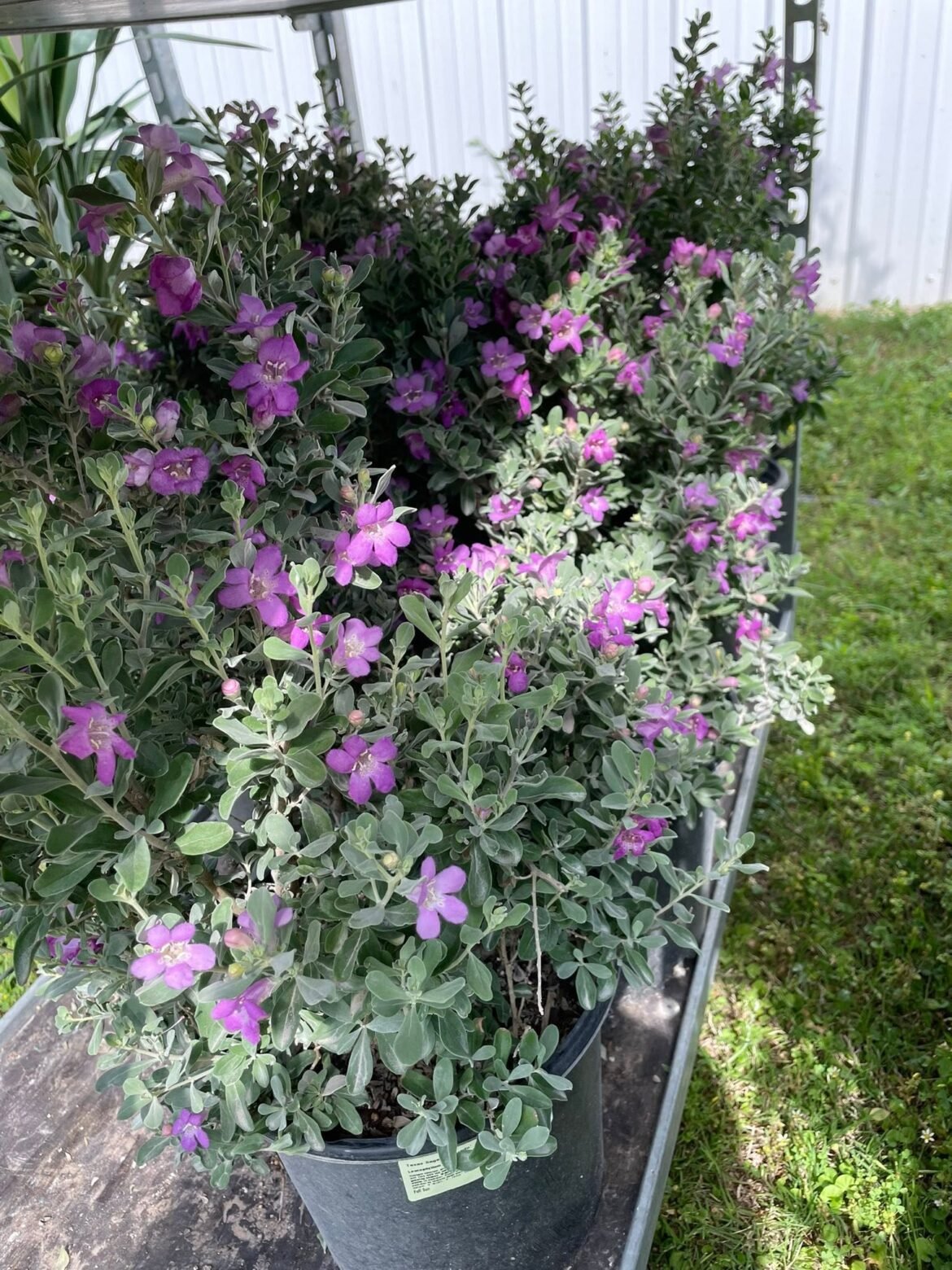
Texas sage, Leucophyllum frutescens, is an evergreen to semi-evergreen shrub famous for silvery foliage and purple flowers. It is one of the best choices for extremely dry, sunny landscape locations.
Gen1 Greenhouse offers ‘Compact’ and ‘Silverado’ forms.
Quick Care Guide
Light: Full sun
Soil: Well-drained soil
Water: Low once established
Fertilizer: Little or none
Pruning: Light shaping after flowering
Best Use: Drought-tolerant landscapes, hedges, specimens
Native Status: Native Texas plant
Overview
Texas sage is extremely tolerant of heat and drought. It is adapted to dry conditions and generally performs poorly when kept constantly wet.
Light Requirements
Full sun is essential for the best growth and flowering.
Avoid planting it beneath dense shade or in locations where surrounding plants block sunlight.
Soil & Planting
Excellent drainage is critical.
Texas sage can tolerate a range of soils but should never be planted into an area that remains waterlogged.
Watering
Water newly established plants during dry weather.
Once established, Texas sage requires very little irrigation. Overwatering is one of the most common causes of poor performance.
Fertilizing
Texas sage generally does not need regular fertilization.
Extension guidance specifically advises against routine fertilization of established Texas sage.
Pruning
Prune lightly to maintain the desired shape.
Because flowers develop on new growth, avoid excessive pruning that removes the plant’s productive branches too close to the flowering period.
Seasonal Care in East Texas
Winter: Evergreen or semi-evergreen foliage usually persists.
Spring: Perform limited shaping and inspect for cold damage.
Summer: Water sparingly during extreme drought.
Fall: Flowering often occurs after weather changes associated with rainfall.
Pests & Diseases
The greatest cultural problem is generally excessive moisture rather than insect pressure.
Where to Find Quality Texas Sage
Gen1 Greenhouse offers Texas sage ‘Compact’ and ‘Silverado’ for water-conscious East Texas landscapes.
Other Care Guides
See our other Gen1 Greenhouse guides for drought-tolerant and native plants.