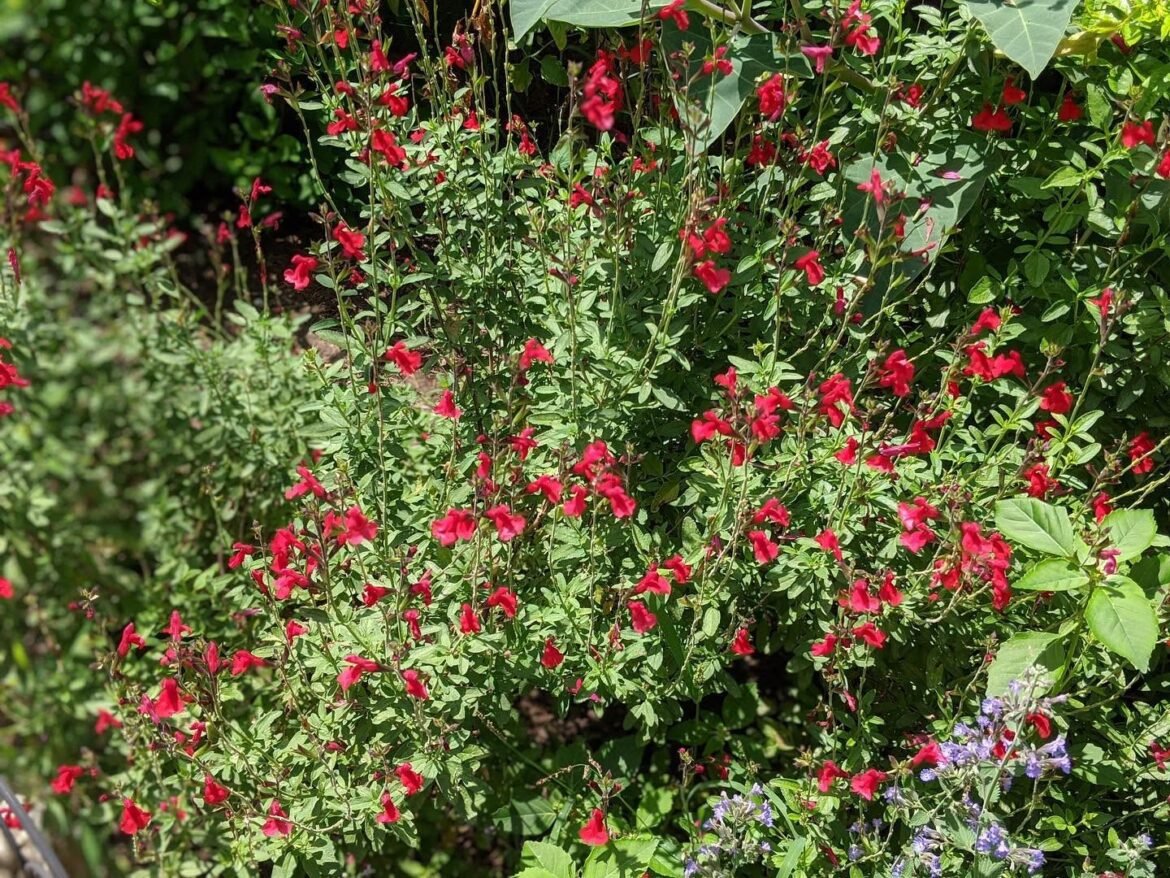
Salvia greggii, commonly called autumn sage, is a Texas-native perennial subshrub known for its colorful flowers and exceptional heat and drought tolerance.
Gen1 Greenhouse offers standard Salvia greggii and the ‘Pink Star Series’.
Quick Care Guide
Light: Full sun; some afternoon shade in extreme heat
Soil: Well-drained soil
Water: Moderate to low once established
Fertilizer: Light feeding
Pruning: Lightly prune after major flowering flushes
Best Use: Pollinator gardens, borders, rock gardens
Native Status: Native to Texas
Overview
Autumn sage is native to Texas and Mexico and commonly grows approximately 2 to 3 feet tall and wide. It naturally occurs on rocky slopes and is adapted to dry conditions.
Light Requirements
Full sun is preferred.
In very hot East Texas locations, some afternoon shade can be tolerated without significantly reducing performance.
Soil & Planting
Use well-drained soil.
Rocky, sandy, or otherwise poor soil is often preferable to heavy, constantly wet soil.
Watering
Water new plants regularly until established.
Established plants are drought tolerant and should not be kept constantly wet.
Fertilizing
Autumn sage generally requires little fertilizer.
A light spring feeding is sufficient in most landscape beds.
Pruning
Lightly prune after flowering to encourage compact growth and additional branching.
Avoid repeatedly shearing the plant into a dense ball.
Seasonal Care in East Texas
Winter: Plants may remain partially evergreen or suffer some dieback depending on winter severity.
Spring: Remove damaged growth and encourage new branching.
Summer: Water sparingly but deeply during prolonged drought.
Fall: Flowering can continue heavily while temperatures remain favorable.
Pests & Diseases
Autumn sage is generally a low-maintenance plant. Good drainage and adequate sunlight are important for preventing root and foliage problems.
Where to Find Quality Salvia greggii
Gen1 Greenhouse offers Salvia greggii and the Pink Star Series for East Texas gardens.
Other Care Guides
See our other Gen1 Greenhouse guides for native plants and pollinator-friendly perennials.